
Motocross Neck Braces for Kids: Benefits, Fit & Safety
Table of Contents
- What Motocross Neck Braces Do for Young Riders
- How Motocross Neck Braces Work
- Motocross Neck Brace Pros and Cons
- Youth Motocross Neck Brace Fit and Sizing
- Best Neck Brace for Youth Motocross: Making the Right Choice
- Neck Braces and Riding Position: What Parents Should Know
- Evidence, Limits, and Realistic Expectations
- Frequently Asked Questions
Last Updated: October 10, 2026
What Motocross Neck Braces Do for Young Riders
Motocross neck braces kids wear are protective devices designed to limit extreme head and neck movement during crashes and impacts. For young riders, these braces work by restricting hyperextension and hyperflexion, the backward and forward bending that causes the most severe neck injuries in motocross accidents. The goal is straightforward: reduce the risk of spinal cord injury and serious neck trauma when crashes happen, not if they happen.
Parents often ask whether a neck brace is necessary for their kids. The honest answer depends on riding context and skill level, but the injury risk in motocross is real enough that many experienced families consider it a core piece of protective equipment alongside helmets and chest protectors.
Understanding how these braces work, and their actual limitations, helps parents make informed decisions rather than buying gear based on fear alone.
How Motocross Neck Braces Work
Motocross neck braces function through two primary mechanisms: they limit the range of motion your child's neck can achieve during a crash, and they distribute impact force across a larger surface area to reduce concentrated stress on the spine.
Limiting Hyperextension and Hyperflexion
The most dangerous neck injuries in motocross occur when the head snaps backward (hyperextension) or forward (hyperflexion) beyond normal movement limits. A neck brace sits across the shoulders and upper chest, with rigid or semi-rigid supports on both sides of the neck. When impact occurs, these supports physically prevent the head from moving beyond a safe range.
Hyperextension happens when a rider is thrown backward over the bike or lands hard on their back. Hyperflexion occurs when the rider's head is pushed forward violently. Both can damage the spinal cord and vertebrae. By restricting this extreme motion, a well-fitted brace reduces the likelihood of these injuries occurring in the first place.
Distributing Impact Force
Instead of impact energy concentrating on the neck and spine, a properly designed neck brace spreads that force across the shoulders, collarbone, and upper chest. This distribution means no single point bears the full shock of a crash. The design typically includes foam padding and rigid chassis elements that work together to absorb and redirect energy away from vulnerable structures.
Motocross Neck Brace Pros and Cons
Like any piece of protective equipment, neck braces come with real advantages and genuine trade-offs. Parents need to understand both sides before deciding whether one is right for their child.
Key Advantages for Young Riders
A neck brace reduces injury risk during crashes, that's the primary benefit. Young riders are still developing coordination and judgment, so crashes happen more often. A brace can mean the difference between a sore neck and a serious spinal injury that affects a child for life.
Neck braces also provide psychological confidence. Kids who wear proper protection often ride with less fear and hesitation, which paradoxically can improve their technique because they're not riding defensively or tensely. Confidence translates to smoother lines and better body positioning.
For parents, a neck brace is visible proof that you've taken safety seriously. It's a tangible investment in your child's wellbeing, which matters emotionally even if the brace never prevents a single injury.
Trade-Offs and Potential Drawbacks
The most discussed concern is collarbone injury risk. Some riders report that a poorly fitted or overly rigid brace can increase collarbone fracture risk during certain types of crashes, particularly when a rider falls sideways.
Neck braces also restrict range of motion. Your child won't be able to turn their head as far or move their neck as freely.
There's also a comfort factor. A neck brace adds weight and pressure around the neck and shoulders. On hot days or during long riding sessions, this can become fatiguing or uncomfortable. Kids who aren't used to wearing one may complain or resist wearing it consistently.
Finally, a neck brace is only one piece of the protective puzzle. It doesn't prevent all injuries and shouldn't create a false sense of security that makes parents or kids take unnecessary risks.
Youth Motocross Neck Brace Fit and Sizing
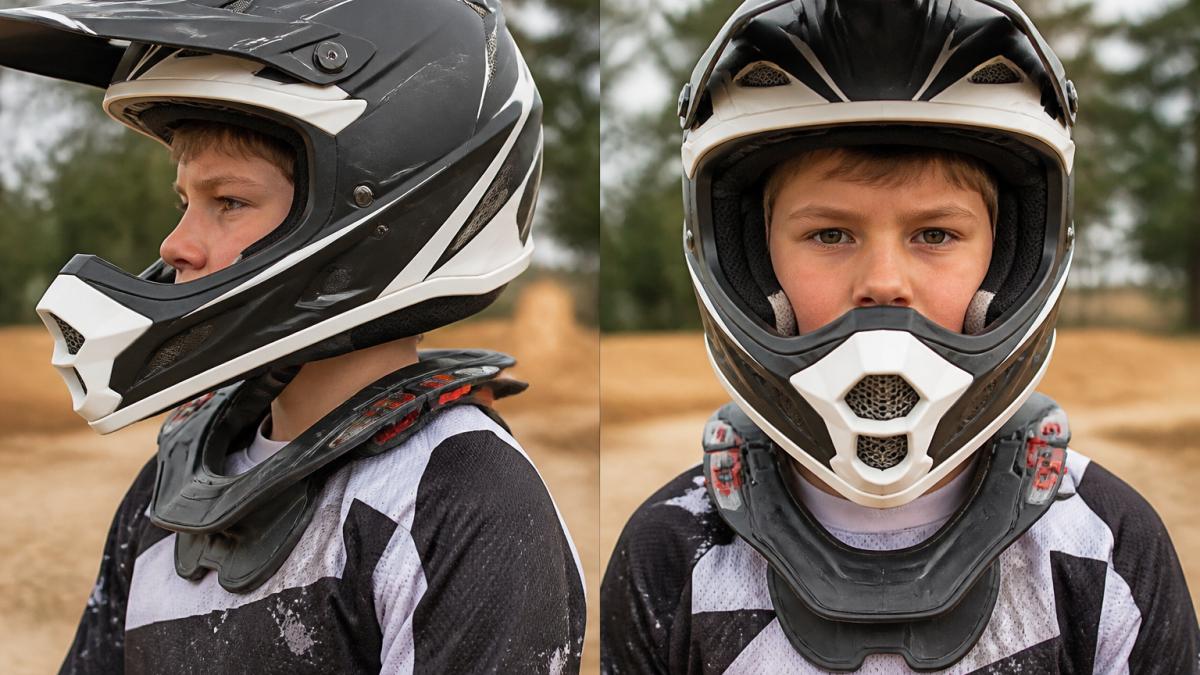
Fit is everything with neck braces. A brace that's too loose won't restrict motion effectively. A brace that's too tight restricts breathing, causes discomfort, and increases the risk of collarbone injury. Getting the size right for a young rider requires measurement and careful attention to how the brace sits on your child's body.
Measuring and Choosing the Right Size
Start by measuring your child's neck circumference at the base of the neck, where the brace will sit. Most manufacturers provide sizing charts based on neck size and sometimes age or weight.
When the brace arrives, have your child wear it over a thin shirt or base layer. The brace should sit snugly against the shoulders without gaps, and it should not restrict breathing or cause pain.
Check the fit from multiple angles. The brace should be centered, not tilted to one side. The front panel should sit flat against the upper chest without bunching or riding up.
Have your child move their head side to side and forward and backward while wearing the brace. They should feel resistance, that's the point, but not sharp pain or numbness.
Compatibility with Helmets and Chest Protectors
A neck brace must work seamlessly with a helmet and chest protector. Poor compatibility can create gaps in protection or cause the brace to shift during a crash.
The helmet should sit on top of the neck brace, not inside it. There should be no gap between the helmet and the top of the brace. If there's space, the helmet can shift independently during impact, defeating part of the brace's purpose.
The chest protector should sit below the neck brace. The brace's lower edge should rest on top of the chest protector, creating a continuous protective surface from neck to torso.
Before buying a neck brace, check compatibility with your child's specific helmet and chest protector. Some braces work better with certain helmet shapes or brands. Don't assume all combinations work, test the fit before your child rides.
Age, Growth, and Reassessment
Young riders grow quickly. A neck brace that fits perfectly in spring may be too small by fall. Check fit every 2-3 months, especially for children under 12.
Signs that a brace no longer fits include visible gaps between the brace and shoulders, difficulty fastening straps, or complaints of discomfort that weren't there before. When fit deteriorates, it's time to size up or replace the brace.
As kids grow and develop better coordination, their protective equipment needs may change. A 6-year-old just starting out might need maximum restriction and support. A 12-year-old with better body control might tolerate and benefit from a lighter, less restrictive brace designed for more advanced riders.
Best Neck Brace for Youth Motocross: Making the Right Choice
Choosing motocross neck braces kids need isn't about finding the "best" brand, it's about matching the right brace to your child's age, riding level, and specific needs.
Riding Context and Skill Level
A beginner rider on a mini bike needs different protection than an advanced youth rider on a full-size bike. Beginners crash more often but typically at lower speeds. Their brace should prioritize comfort and ease of adjustment so they'll actually wear it consistently.
Intermediate riders on larger bikes experience faster speeds and more violent crashes. They need a brace that provides stronger restriction and better impact distribution, even if it's slightly less comfortable.
Advanced youth riders often prefer lighter braces that restrict motion less, because they've developed the neck strength and body awareness to handle slightly more movement. They're also more likely to comply with wearing a brace if it doesn't feel overly restrictive.
Match the brace to the bike size and your child's experience level. A brace designed for a 65cc pit bike isn't ideal for a full-size 250F, and vice versa.
Safe Introduction and Adaptation
If your child has never worn a neck brace, introduce it gradually. Start with short practice sessions in a controlled environment, a parking lot or flat area, before heading to the track or trail.
Some kids take to a brace immediately. Others need several rides to feel comfortable. Don't push too hard if your child is genuinely uncomfortable, a brace worn reluctantly provides less benefit than one worn confidently.
Have your child practice looking through corners, checking blind spots, and moving their body the way they normally would. They'll discover that the brace restricts extreme motion but allows plenty of normal riding movement.
If your child complains of numbness, tingling, or sharp pain (not just discomfort), stop using the brace and reassess fit. These symptoms indicate a problem that needs to be solved before riding.
Neck Braces and Riding Position: What Parents Should Know
A common concern is whether a neck brace changes riding position negatively. The short answer: it shouldn't, if it's fitted correctly and your child adapts properly.
A well-fitted brace allows normal riding posture. Your child should still be able to attack the bike, move their body forward and back, and maintain their usual riding style.
Some riders report that a brace initially feels restrictive to their attack position. This usually improves after a few rides as they adjust. If the restriction persists or feels severe, the brace may be too tight or the wrong size for your child's body.
The key is ensuring your child practices and adapts before racing or riding in challenging conditions. A few practice sessions build confidence and muscle memory, so when a crash happens, your child's body already knows how to move within the brace's constraints.
Evidence, Limits, and Realistic Expectations
Neck brace manufacturers make injury-prevention claims. Parents should understand what the evidence actually shows and what remains uncertain.
Neck braces demonstrably reduce the range of motion during impacts, that's measurable and proven.
A neck brace is one layer of protection. It works best when combined with proper technique, appropriate bike selection, helmet use, and chest protection.
Set realistic expectations with your child: a neck brace reduces injury risk, but it doesn't make riding completely safe.
Parents who ride with their kids understand the balance between safety and letting children experience the sport they love. A motocross neck brace is a practical tool that fits into that balance.
At Moto Dad Racing, we believe families who ride together should gear up together.
Frequently Asked Questions
Are motocross neck braces worth it for kids?
Neck braces can reduce the risk of certain neck and spinal injuries by limiting extreme head and neck movement during crashes and impacts. Whether they're worth it depends on your child's age, riding skill, and the intensity of their motocross involvement. Younger or newer riders benefit most from the added protection, though they work best as part of a complete protective equipment setup that includes a helmet and chest protector. No brace prevents all injuries, so they're one layer of a safety strategy, not a guarantee.
What are the downsides of a youth motocross neck brace?
The main trade-offs include potential restriction of natural head and neck movement, which can affect riding posture and the rider's attack position. Some young riders report discomfort if the brace isn't fitted properly or if it contacts the helmet awkwardly. There is also ongoing discussion about whether neck braces could increase collarbone injury risk in certain crash scenarios, though evidence remains mixed. Proper fit, gradual adaptation, and choosing a brace designed for youth riders minimize these concerns.
How do I choose the right motocross neck brace for my child?
Start by measuring your child's neck circumference and checking the manufacturer's sizing chart. The brace should fit snugly against the shoulders and neck without gaps, but not so tight it restricts breathing or causes discomfort. Consider your child's age and riding level: younger or less experienced riders benefit more from a brace. Test compatibility with your child's helmet and chest protector before committing, and introduce the brace gradually so your child can adapt to wearing it. Plan to reassess fit every 6-12 months as children grow.
Can a motocross neck brace prevent all neck injuries?
No. A neck brace reduces the risk of certain injuries by limiting extreme hyperextension and hyperflexion, but it cannot prevent all neck or spinal injuries. The brace works best when combined with a quality helmet, chest protector, and proper riding technique. Injury prevention also depends on crash severity, impact angle, and your child's overall physical conditioning. Parents should view a neck brace as one important protective tool, not a complete solution, and continue emphasizing safe riding practices and appropriate skill progression.