
When to Replace Kids Dirt Bike Chest Protectors
Table of Contents
- Signs Your Child's Chest Protector Needs Replacement
- How to Inspect a Dirt Bike Chest Protector
- When to Replace Motorcycle Protective Gear After a Crash
- Youth Motocross Chest Protector Sizing and Growth Checks
- Motocross Chest Protector Care and Maintenance
- Replacement Timeline and Inspection Frequency
- Frequently Asked Questions
Last Updated: October 6, 2026
Signs Your Child's Chest Protector Needs Replacement
A chest protector with visible damage, worn straps, or compressed foam has reached the end of its useful life, when to replace kids dirt bike chest protectors is clear when any of these signs appear, as replacement is necessary for safe riding.
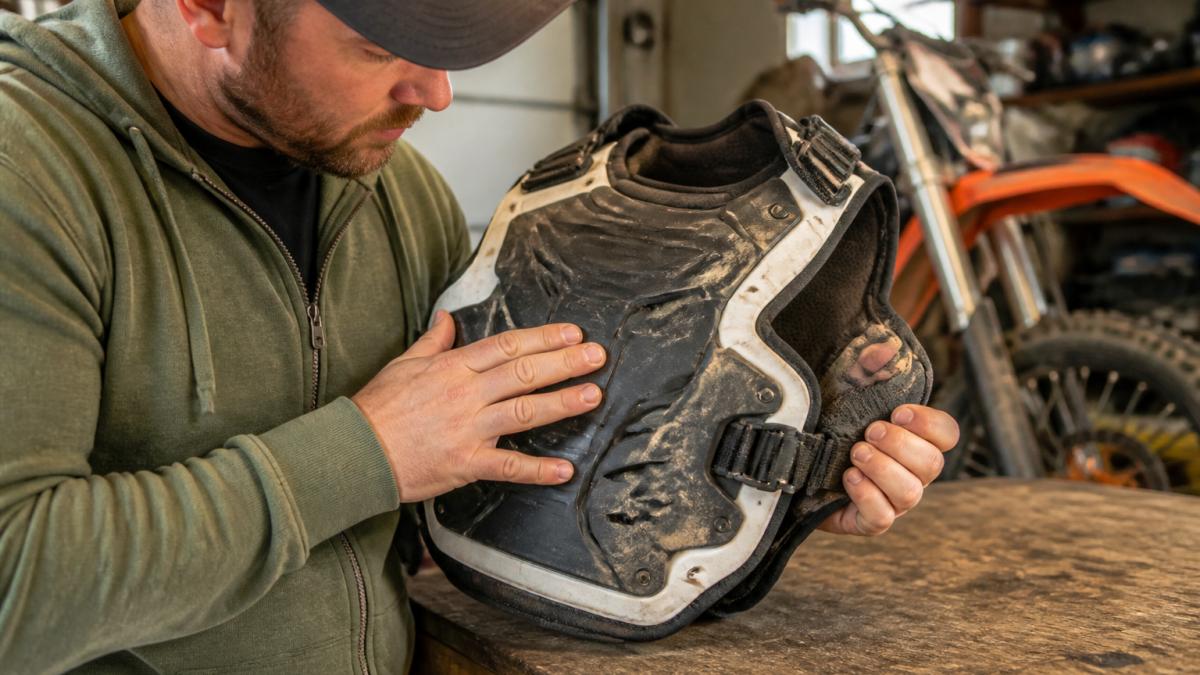
A failing protector can't absorb impacts properly, putting your young rider at serious risk during falls.
Visible cracks and shell damage
Cracks in the outer shell are a red flag: the material has begun to break down, and small cracks spread quickly after another hard fall. Check the front, sides, and back, especially areas that have hit the ground before. Discoloration or deep gouges aren't cosmetic, once the shell cracks, the foam underneath loses effectiveness.
Broken straps and fasteners
Straps hold the protector in place. If they're torn, frayed, or no longer stick, the gear shifts during a crash, and a loose protector offers almost no protection. Check velcro for dirt and wear; once it loses grip, replace the protector rather than taping it.
Foam degradation and compression
Compressed or permanently dented foam has lost its cushioning ability, one of the most serious signs of wear.
Press the foam: it should spring back quickly.
Foam also breaks down from sun, sweat, and repeated impacts, so even a fine-looking shell can hide damaged foam, inspect inside and out.
How to Inspect a Dirt Bike Chest Protector
A monthly inspection catches damage early, so you can plan replacements before a ride day.
Monthly inspection routine
Set a day each month to check your child's gear, skipping months means missing developing problems. Start with the shell: look for cracks, splits, dents, or discoloration, and feel for rough, thin, or weak spots. Pull each strap and fastener to confirm it holds tight, check velcro grip, and inspect buckles and clips for cracks or bending.
Post-ride damage assessment
After a crash or hard fall, inspect the protector immediately, even if your child seems fine, the gear may have hidden damage.
Look for new cracks, dents, or shell damage, check foam compression in the impact area, and feel for loose straps or fasteners.
If it took a direct hit, replace it even if damage isn't obvious, foam can be damaged internally.
Inspection checklist for parents
Use this checklist monthly or after any crash:
- Outer shell: no cracks, splits, or deep gouges
- Velcro straps: grip firmly when pressed together
- Buckles and clips: snap or lock securely without cracking
If any item fails, the protector needs replacement.
When to Replace Motorcycle Protective Gear After a Crash
Impact damage can be obvious or hidden, but a single hard chest impact is usually a replacement event, not a repair.
Why one hard impact can end a protector's life
Chest protectors absorb impact energy: the shell deflects the load while the foam liner crushes to slow energy transfer.
That's why a shell can look perfect while the liner is spent: a protector that took a direct chest hit may pass visual inspection and still underperform on the next fall.
Impact damage that requires immediate replacement
Replace the protector right away if any of these are true:
- Direct hit to the chest or spine area. Assume internal foam damage even if the shell is intact.
- Cracks, splits, or spider-webbing in the shell. A cracked shell is a failed shell, it will spread with the next impact.
- Dents that do not pop back out. A permanent dent means the foam underneath has compressed.
If your child hit the ground hard enough that the protector took the load, you'll know when to replace kids dirt bike chest protectors, the safest approach, and the one most manufacturers recommend.
Repair versus replacement decisions
Some damage is repairable, most is not:
Usually safe to repair (if the manufacturer sells the part):
- Worn or stretched straps, when replacement straps are available from the brand
- A single failed buckle or clip, when it is a user-replaceable component
- Cosmetic scuffs, scratches, or faded graphics that do not penetrate the shell
Never safe to repair:
- Cracks or splits in the shell, glue, epoxy, and tape do not restore structural integrity, and the repair will fail under load
- Compressed or crushed foam, you cannot re-expand foam cells
- Delaminated shell-to-liner bonds
Taping or zip-tying a cracked protector doesn't restore protection, it hides the failure until the next crash.
What the standards and manufacturers actually say
Youth chest protectors are typically tested to a recognized protective-equipment standard, and manufacturers publish care and replacement guidance. Two takeaways:
- Check the manual first. Most brands specify an inspection interval and describe what counts as end-of-life damage. That guidance overrides any general rule of thumb you read online.
- Follow the standard's intent. Standards for this category are written around single-impact performance, the protector is designed to manage one significant impact, not a series of them. That is the technical reason a hard crash is a replacement trigger.
manufacturer care and replacement guidance for youth chest protectors
The 5-minute post-crash inspection
After any crash, before the next ride:
- Wipe the shell clean so you can actually see cracks.
- Flex the shell gently at the edges, listen and look for splits.
- Press the foam across the chest, sides, and back. It should spring back fast.
- Pull every strap and clip hard. Nothing should slip, pop, or crack.
- Re-check fit on your child, a crash can bend or stretch a protector out of shape.
If any step fails, the protector is done. When in doubt, replace it. A new protector costs far less than treating an injury the old one should have prevented.
Youth Motocross Chest Protector Sizing and Growth Checks
Kids grow fast, so a protector that fit six months ago may no longer provide proper coverage. Regular fit checks keep your child protected.
How fit changes with growth
Check fit every three months during riding season: too small won't cover the chest, and too large will shift and leave gaps.
It should sit snug without bunching, not ride up when your child raises their arms, and tighten securely without being painfully tight.
If your child has grown, the protector may no longer cover the full chest, wrap around the ribs, or reach the right length.
Compare the current fit to how it fit when new. If coverage has changed, it's time to size up.
Coverage gaps and mobility issues
The protector must cover the chest, wrap around the sides, and protect the ribs and upper abdomen, gaps mean unprotected areas in a crash. Your child should move freely and breathe without restriction; if mobility is limited, they may resist wearing it, defeating the purpose.
Motocross Chest Protector Care and Maintenance
How you store and clean the protector affects its lifespan.
Cleaning and drying procedures
After riding in mud or wet conditions, wash with cool water and mild soap, scrubbing gently with a soft brush or cloth. Rinse thoroughly, soap residue left on the foam breaks it down over time. Air dry completely before storing, moisture damages foam and creates odor.
Storage practices to prevent material degradation
Store in a cool, dry place. Avoid damp basements, hot garages, or direct sunlight, heat and moisture break down foam and weaken the shell. Keep it away from chemicals, fuel, and oil. Don't stack heavy items on top, weight permanently compresses foam.
Replacement Timeline and Inspection Frequency
No expiration date is stamped on a kids chest protector. Replacement is driven by three clocks: wear, growth, and time in storage, whichever runs out first wins.
The three clocks that drive replacement
1. Wear clock. How hard and often your child rides and how many impacts the protector has absorbed, a rider who crashes weekly burns through one far faster than one who never falls.
2. Growth clock. Kids grow in spurts. A protector that fit in spring may leave the lower chest or ribs exposed by fall. Growth usually forces replacement before wear does.
**3.
Inspection frequency: a practical schedule
| When | What to do |
|---|---|
| Before every ride | Quick visual: straps tight, no obvious cracks, fits snug |
| Monthly during riding season | Full inspection: shell, foam, straps, buckles, seams, fit |
| After any crash | Full post-crash inspection (see previous section) |
| Before each riding season | Deep inspection plus fit check against current body size |
| After long storage | Inspect for foam hardening, odor, and shell discoloration before use |
A monthly full inspection takes about five minutes and catches most problems before they become safety issues.
Age-based replacement guidelines
These are starting points, not hard rules. Manufacturer guidance and your own inspection always take priority.
- Frequent riders (weekly or more): plan on a new protector roughly every 12 to 18 months, sooner if there have been hard crashes.
- Regular riders (a few times a month): two to three years is a realistic ceiling if there have been no hard impacts and the gear is stored well.
- Occasional riders: replace on growth or visible degradation rather than age alone, but still inspect before every season.
Growth-related replacement triggers
Growth is the most common reason a good protector gets retired. Watch for these signals:
- The bottom edge of the chest plate rides above the lower ribs when your child is in a riding position.
- The side panels no longer wrap around the ribs, you can see skin at the sides.
- The shoulder straps are maxed out and the protector still shifts when you push on it.
If any are true, size up. A protector that doesn't cover the chest, ribs, and spine isn't protecting those areas, no matter how good the shell looks.
Storage and material degradation triggers
Even a never-crashed protector can reach end-of-life from storage alone. Replace it if you find:
- Foam that has hardened or turned brittle. Press it, if it cracks or crumbles instead of compressing, it is done.
- A persistent odor that does not go away after cleaning. This usually means moisture has been trapped in the foam.
- Yellowing, chalky, or sticky shell surfaces. These are signs of UV and chemical breakdown.
Seasonal inspection before riding season
Before the first ride of the season, run the full checklist: shell, foam, straps, buckles, seams, and fit. If anything fails, replace it before your child rides.
If your child has grown since last season, do the fit check first, a protector that no longer covers the chest and ribs needs replacing even if it looks new.
Frequently Asked Questions
When should you replace a kids' dirt bike chest protector?
Replace your child's chest protector immediately if the protective shell has visible cracks, if foam no longer springs back after compression, or if straps and buckles are broken. Additionally, replace it if your young rider has outgrown the protector and it no longer covers the chest and back properly. Most chest protectors last 2-4 years with regular use before material degradation requires replacement, but damage or poor fit demands immediate action.
How do you know if a youth chest protector is too small?
A protector is too small when gaps appear between the protector edges and your child's body, when shoulder cups no longer align with the shoulders, or when the protector rides up during movement. Check fit by having your young rider wear the protector over their jersey and riding pants, there should be full coverage from collarbone to waist, with no exposed chest or back areas. If your child has grown a full size up, replacement is necessary for proper protection.
What damage makes a motocross chest protector unsafe to use?
Any crack in the hard plastic shell compromises impact protection and should trigger replacement. Foam that has permanently compressed, crumbled, or separated from the shell no longer absorbs roost or impact effectively. Broken or missing straps prevent secure fit and allow the protector to shift during riding. Additionally, if the protective shell is dented so deeply that it sits unevenly against your child's body, the protector cannot distribute impact force properly and must be replaced.
How often should you inspect a child's dirt bike protective gear?
Inspect your child's chest protector monthly during riding season and after every crash or hard fall. Before each riding day, do a quick visual check of the shell for cracks and test that straps fasten securely. At the start of each season, perform a thorough inspection checking foam compression, strap condition, and overall fit. This routine catches wear early and ensures your young rider's safety gear remains effective throughout the year.
Keeping your child safe on the dirt bike means staying on top of gear maintenance. Regular inspections catch problems early. Knowing when to replace chest protectors takes the guesswork out of safety decisions. When it's time for new protective gear or family motocross apparel to celebrate your shared passion for riding, Moto Dad Racing has you covered with quality family-focused designs that match your commitment to safety and style.