
Kids Dirt Bike Apparel Safety: Essential Features Guide
Table of Contents
- Why Kids Dirt Bike Apparel Safety Matters
- Youth Motocross Helmet Safety Standards and Certification
- Body Armor and Chest Protection for Young Riders
- Dirt Bike Gear Sizing Guide for Children
- Boots, Gloves, and Extremity Protection
- Best Motocross Clothing Brands for Families
- Pre-Ride Safety Inspection Checklist
- Weather-Specific Apparel and Maintenance
- Frequently Asked Questions
Last Updated: September 27, 2026
Why Kids Dirt Bike Apparel Safety Matters
The right protective gear can mean the difference between a minor scrape and a serious injury. When you're equipping young riders, kids dirt bike apparel safety isn't just about looking the part, it's about preventing injuries that could sideline them for weeks or months.
Young riders need gear that fits their growing bodies, moves with them during aggressive riding, and stays in place when things get rough. A helmet that shifts during a crash, gloves that slip off, or body armor that rides up offers false protection and real danger.
Kids' bodies are still developing, and impact forces that an adult might walk away from can cause lasting damage to growth plates, spine, and developing organs. This is why choosing apparel with proper certification standards, correct fitment, and age-appropriate design matters.
Youth Motocross Helmet Safety Standards and Certification
A full-face helmet is non-negotiable for any young dirt bike rider, protecting against head trauma, facial fractures, and jaw damage. Certification standards tell you which helmets actually meet safety requirements.
Look for helmets with DOT (Department of Transportation) certification or Snell certification. DOT requires helmets to withstand specific impact forces; Snell applies even more rigorous testing. Either certification ensures the helmet will perform during a crash.
A full-face helmet with proper ventilation is essential, kids generate heat quickly, and trapped sweat makes them resist wearing it properly. Look for multiple vents that channel air across the forehead and out the back. Fit matters as much as certification: too loose and it shifts during a crash, too tight and it causes headaches and neck strain.
The helmet should sit low on the forehead, cover the ears completely, and not move when you grab the bill and twist. Your child should fit one finger between chin and strap when fastened. As kids grow, helmet replacement is essential, last season's fit may no longer protect.
Body Armor and Chest Protection for Young Riders
Chest protectors and impact vests are critical for young riders because their rib cages are still developing and more susceptible to fractures from blunt force trauma.
A proper chest protector wraps around the torso with rigid or semi-rigid panels over the sternum, ribs, and sides to absorb impact and distribute force. The best combine protection with mobility, allowing free movement without restricting breathing or arm movement.
Look for articulated design where protective panels move with your child's body. Foam padding should be dense enough to absorb impact without causing discomfort. Shoulder protection matters because kids instinctively put their arms out during falls, and shoulder separation is common in young riders.
Proper fitment is essential: too loose and it won't stay in place, too tight and it restricts breathing. Your child should take a full breath without the armor digging in. As kids grow, replace armor or choose adjustable designs with straps that extend useful life.
Dirt Bike Gear Sizing Guide for Children
Kids' gear doesn't follow standard clothing sizes, and proper sizing ensures protective elements stay in place and your child can move freely without excess fabric catching on controls.
Growth-Based Sizing: Planning Ahead
A common mistake is buying gear that fits today without considering growth. Size up slightly for chest protectors, boots, and gloves (which need snug fits for safety), but a half-size up for jerseys and pants is reasonable since excess fabric can be managed.
Track chest circumference, inseam, and foot length every few months. Use brand sizing charts based on measurements rather than age, which is more reliable.
Prioritize safety-critical pieces: buy boots, gloves, and chest protectors in current size and plan replacement as your child grows. For jerseys and pants, buying up one size extends useful life by a season or two.
Fitment and Ergonomics for Different Ages
Young riders aged 3-5 have shorter arms relative to torso and proportionally longer legs. Brands focusing on younger riders account for these differences better than standard youth sizing.
Kids aged 6-10 experience accelerated growth, with limbs lengthening faster than torso. Adjustable gear with straps, closures, or expandable panels becomes valuable during this phase.
By age 11-14, kids approach adult proportions but still need youth sizing designed for their physical capabilities: shorter inseams, narrower shoulders, and lighter weight.
Ergonomic fit means your child can reach controls easily and maintain proper riding position. Gloves should allow full finger movement, boots should allow ankle articulation, and body armor should sit centered without riding up.
Boots, Gloves, and Extremity Protection
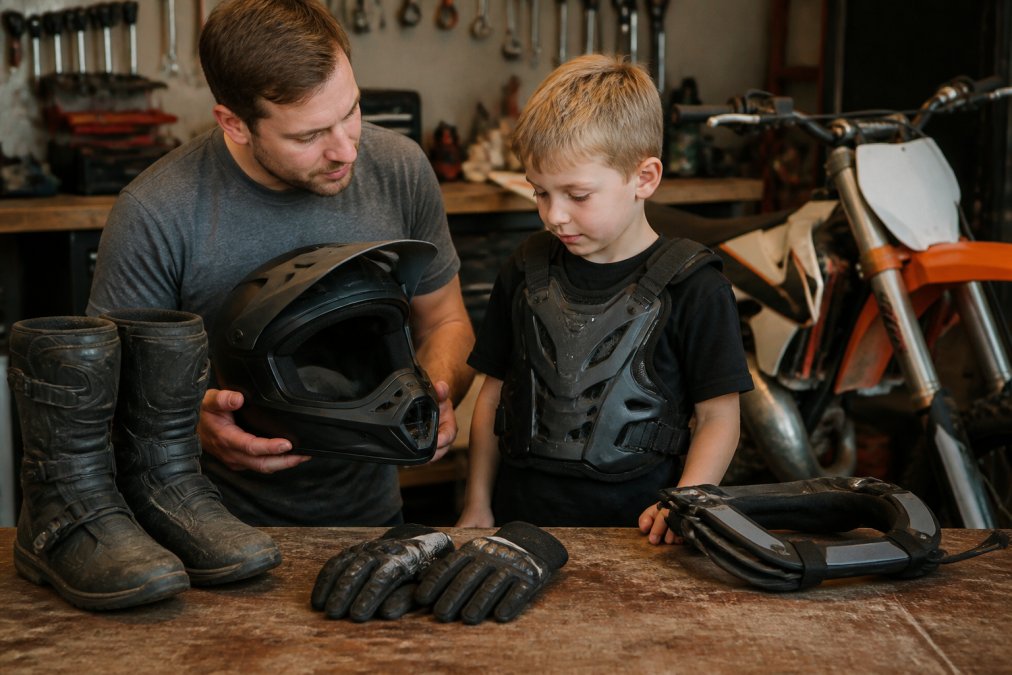
Hands and feet take a beating in dirt biking. When kids crash, they instinctively reach out to catch themselves, which means hands and wrists absorb impact. Boots protect ankles from twisting injuries and shield feet from hot pipes and shifting pegs.
Quality dirt bike boots provide ankle support that extends several inches above the ankle bone. Look for boots with reinforced heel cups and rigid soles that don't flex excessively. The ankle support should prevent side-to-side motion without restricting forward and backward movement needed for riding. Boots should fit snugly around the heel and midfoot but allow room for thick socks. A boot that's too loose causes blisters and allows your child's foot to move inside the boot during riding.
Full-finger gloves are essential. Fingerless gloves or thin work gloves don't provide adequate protection. Look for gloves with padded palms, reinforced knuckles, and abrasion-resistant materials like leather or synthetic textiles. The gloves should fit snugly without restricting grip strength. Your child should be able to hold the throttle and operate brakes smoothly while wearing them.
Elbow and knee pads are often overlooked but critical for young riders. Kids fall more frequently than adults as they're learning, and elbows and knees are common impact points. Pads with articulated design allow movement without restricting mobility. The padding should be dense enough to absorb impact but not so thick that it causes discomfort or limits range of motion.
When fitting extremity gear, remember that kids grow quickly. Boots and gloves can't be adjusted much for growth, so plan on replacement every 1-2 seasons.
Best Motocross Clothing Brands for Families
When you're outfitting your entire family in motocross apparel, you want brands that understand both safety and style. Moto Dad Racing specializes in family-focused motocross apparel that lets you and your kids match while celebrating your shared passion. Their hoodies and tee shirts are designed with durability in mind.
Pre-Ride Safety Inspection Checklist
Before every ride, conduct a quick safety check of your child's gear. This takes five minutes and catches problems before they become dangerous.
Helmet inspection:
- Check the shell for cracks or damage
- Ensure the chin strap is intact and fastens securely
- Verify the helmet sits low on the forehead and covers the ears completely
- Confirm the fit hasn't changed (retest the one-finger chin rule)
Body armor check:
- Look for cracks or compression damage in protective panels
- Ensure all straps and closures are functional
- Verify the armor sits centered on the chest
- Check that padding hasn't compressed or shifted
Boots and gloves:
- Inspect for tears, separated seams, or damaged soles
- Ensure laces or closures are secure
- Check that materials haven't become brittle or cracked
- Verify gloves still provide adequate grip
Extremity protection:
- Look for loose straps or damaged padding on knee and elbow pads
- Ensure closures are functional
- Check for material degradation
Jersey and pants:
- Inspect for tears or separated seams that could catch on controls
- Ensure no loose fabric that could get caught
Weather-Specific Apparel and Maintenance
Dirt biking happens year-round, and weather changes what your child needs to wear under protective gear. Cold weather requires moisture-wicking base layers that keep sweat away from skin while trapping warmth. Cotton absorbs moisture and loses insulating properties when wet, synthetic or wool blends are far better choices.
Frequently Asked Questions
What are the most important safety features in kids' motocross gear?
The most critical features are DOT-certified helmet protection, impact-absorbing chest protectors with articulated design, ankle-support boots, and full-finger gloves with abrasion resistance. A neck brace reduces whiplash injury risk, while knee and elbow pads shield vulnerable joints. Body armor should fit snugly to provide consistent protection without restricting movement. Each piece works together to create comprehensive coverage for high-impact areas during falls or collisions.
How should dirt bike apparel fit a child for maximum safety?
Proper fitment means snug contact without restricting movement or circulation. Helmets should sit level on the head with a two-finger gap at the forehead. Chest protectors must cover the sternum and ribs fully, with secure fastening that prevents shifting. Boots should provide ankle support without pinching. Gloves need to allow full finger mobility. Loose gear shifts during impact and reduces protection; overly tight gear limits mobility and causes fatigue. Check fitment regularly as children grow, especially during the riding season.
What is the difference between casual motocross-themed apparel and protective riding gear?
Casual motocross-themed apparel like hoodies and tee shirts celebrate the sport's culture but offer no impact protection. True protective riding gear is engineered with impact-absorbing materials, reinforced seams, and safety certifications (DOT, ECE). Protective apparel includes helmets, chest protectors, body armor, and boots designed to withstand crashes. For actual riding, children need both: protective gear for safety on the trail and casual apparel for off-bike wear. Never substitute themed clothing for certified protective equipment.
How often should you replace kids' dirt bike safety apparel?
Replace helmets immediately after any significant impact, even if damage isn't visible. Inspect protective gear after every ride for cracks, dents, or material breakdown. Most helmets have a 5-year lifespan from the manufacture date. Body armor, boots, and pads should be replaced when padding compresses, straps fail, or materials show wear that reduces protection. Growing children outgrow gear frequently, making regular replacement necessary for proper fitment and safety. Don't extend the life of compromised protective equipment.