
How to Remove Stains From Motocross Gear
Table of Contents
- Why Proper Stain Removal Matters for Motocross Gear
- What You'll Need Before You Start
- How to Get Mud Stains Out of Motocross Pants
- How to Clean White Motocross Gear
- Best Detergent for Motocross Gear and Stain Treatments
- How to Wash Motocross Gear: Hand-Wash vs. Machine-Wash
- Drying, Storage, and Stain Prevention Between Rides
- Common Mistakes to Avoid When Cleaning Motocross Gear
- Frequently Asked Questions
Last Updated: October 15, 2026
Why Proper Stain Removal Matters for Motocross Gear
Getting your motocross gear dirty is inevitable, but knowing how to remove stains from motocross gear determines whether your jerseys and pants stay vibrant or fade into dingy, damaged fabric.
At Moto Dad Racing, we know quality motocross apparel is part of your family's passion for riding.
The good news: most stains come out if you act fast and use the right approach.
What You'll Need Before You Start
Before tackling any stain, gather these essentials:
- Mild detergent (designed for delicate fabrics or general laundry)
- Stain remover or pre-wash treatment (oxygen-based cleaners work well on most stains)
- Cold water (hot water can set stains permanently)
- Soft brush or cloth (for gentle scrubbing without damaging fabric)
- Basin or bucket (for pre-soaking)
- Towels (for blotting and drying)
Check your gear's care instructions first, most jerseys and pants have tags specifying water temperature and washing method. Follow them, and keep supplies on hand so you can treat stains immediately after your ride, before they dry and set.
How to Get Mud Stains Out of Motocross Pants
Mud is the most common stain on riding pants, but grass, grease, chain oil, and blood each behave differently, using the mud workflow on grease can drive it deeper into the fabric. Below is a stain-by-stain guide so you treat the stain you actually have.
Start with the universal first move
Whatever the stain, do these three things before anything else:
- Read the care label. Most motocross pants are polyester or a polyester/spandex blend with a DWR finish; the label gives the maximum water temperature and whether machine washing is allowed.
- Blot, don't rub. Rubbing spreads the stain into the weave, press a clean towel onto it instead.
- Work from the back. Turn the garment inside-out and treat from the reverse so you push the stain out rather than through.
Mud and dirt
Mud is mostly mineral and organic particulate, so the goal is to remove solids before adding water.
- Let it dry completely, then brush off the bulk with a soft-bristled brush over a trash can, dry mud brushes off, wet mud smears into the weave.
- Pre-soak in cold water for 15-30 minutes so minerals don't bond to the fiber.
- Scrub gently with a soft cloth, rinse until clear, then apply an oxygen-based stain remover to any shadow for 10-15 minutes and rinse cold.
Grass stains
Grass stains are chlorophyll plus plant proteins, and they respond to oxygen-based cleaners, not to soap alone.
- Treat while fresh, grass stains oxidize and set within a day or two.
- Apply an oxygen-based stain remover directly and let it dwell 15-30 minutes.
- Wash in the warmest water the care label allows, grass releases better with some heat, but never exceed the label's maximum.
- Repeat once if a green tint remains, increasing dwell time rather than concentration.
Grease and chain oil
Grease and chain oil are petroleum-based, and water alone will not lift them. This is the one stain where a small amount of dish soap is appropriate.
- Apply a drop of grease-cutting dish soap directly to the stain and work it in with your fingertips for 30-60 seconds, a brush pushes the oil into the weave.
- Let it sit 5-10 minutes, rinse with the warmest water the label allows, then wash normally with mild detergent.
- Check before drying and repeat if any dark spot remains; dryer heat sets the oil permanently.
Blood
Blood is a protein stain, and protein stains set permanently in hot water. Treat blood with cold water only.
- Rinse immediately in cold water from the back of the fabric.
- Apply an oxygen-based stain remover or mild detergent and let it dwell 15 minutes.
- Wash cold, never warm or hot, even after the stain looks gone, and air dry only until you confirm it's fully removed.
When the stain survives the first pass
If a stain remains after one full cycle, do not escalate to bleach or a stronger chemical. Instead:
- Repeat the same treatment with a longer dwell time (30-60 minutes instead of 10-15).
- Soak overnight in cold water with oxygen-based cleaner for set-in stains.
- Check the fabric type. Stretch panels and mesh inserts may need a gentler approach than the main shell.
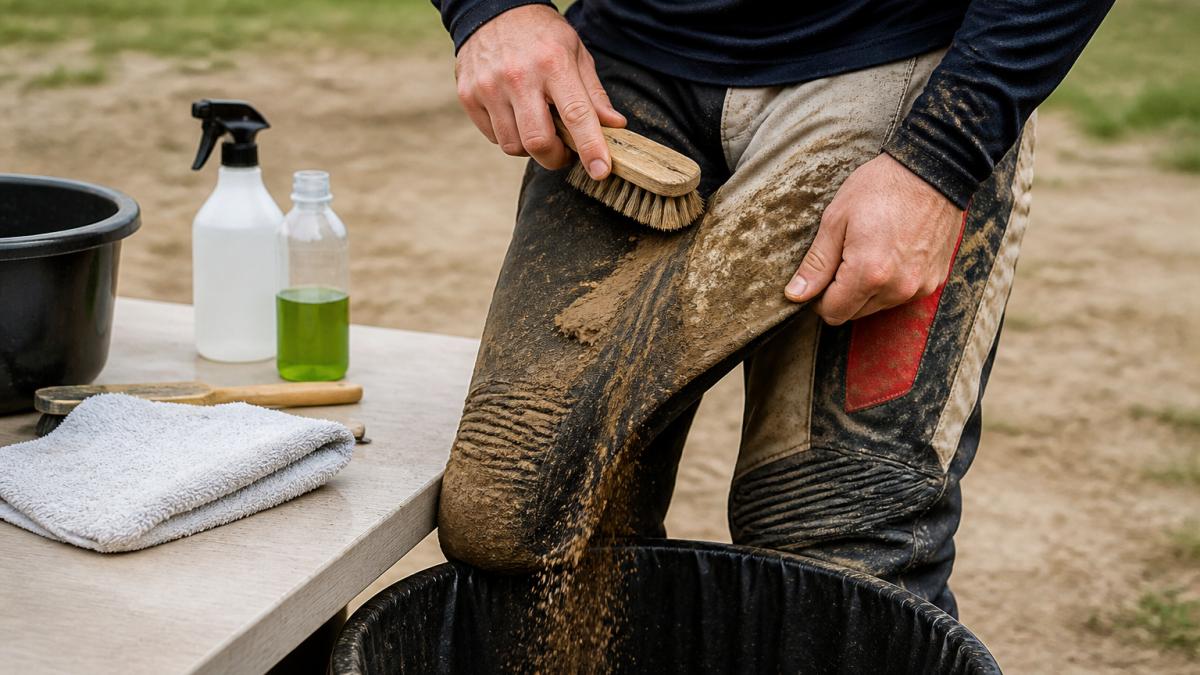
Once the stain is treated, move on to the full wash cycle.
How to Clean White Motocross Gear
White jerseys show every speck of dirt, and aggressive treatments can cause yellowing or discoloration. Stick to mild detergents and oxygen-based cleaners designed for whites.
Treating stains on white gear:
- Use cold water only, hot water yellows white fabrics
- Apply oxygen-based stain remover (not chlorine bleach, which weakens fibers)
- Let the treatment sit for 15 minutes before washing
- Wash separately from darker gear to prevent color transfer
Preventing white gear from yellowing:
- Air dry in shade, never direct sunlight
- Use mild detergent formulated for whites
- Don't over-dry, remove from the dryer while slightly damp
- Store in a cool, dry place away from heat and humidity
Proper stain removal keeps white motocross gear looking fresh for family rides and events.
Best Detergent for Motocross Gear and Stain Treatments
The detergent matters as much as the wash method. Motocross gear uses technical fabrics, polyester, spandex stretch panels, mesh vents, printed graphics, and the wrong product can strip a DWR finish, fade a print, or leave residue that kills moisture-wicking performance.
Match the product to the fabric
| Fabric / feature | Safe choice | Avoid |
|---|---|---|
| Polyester jersey or pant shell | Mild liquid detergent labeled "free and clear" or "sport" | Powdered detergent (leaves residue in synthetic weave) |
| Spandex / elastane stretch panels | Mild liquid detergent, cold water | Chlorine bleach, hot water, fabric softener |
| Printed or heat-transfer graphics | Mild detergent, inside-out wash | Enzyme detergents, direct scrubbing on the print |
| Mesh ventilation inserts | Mild detergent, mesh laundry bag | Brush scrubbing (snags the mesh) |
| DWR-treated outer shell | Detergent labeled DWR-safe or tech-wash | Standard detergent with optical brighteners |
Temperature: cold by default, warm only when the label allows
- Cold water (below 85°F) is the safe default for every stain except grease. It prevents setting protein stains (blood, grass) and protects dyes and prints.
- Warm water (up to 105°F) is acceptable only when the care label permits it and only for grease or oil stains that need heat to release.
- Hot water (above 120°F) should never touch motocross gear. It sets stains, shrinks spandex, and degrades DWR coatings.
Oxygen-based cleaners vs. chlorine bleach
Oxygen-based cleaners (sodium percarbonate) release oxygen in water and lift stains without attacking the fiber, the right choice for whites, colors, and synthetics. Chlorine bleach yellows white polyester, fades prints, and weakens spandex, so reserve it for cotton shop rags, not jerseys.
Enzyme detergents: read the label
Enzyme detergents excel on protein stains in cotton, but many technical-fabric makers advise against them because enzymes can break down the protein-based coatings on some DWR finishes. If your care label says "no enzymes" or "tech wash only," follow it.
How much to use
Use half the amount you would for a normal load. Synthetics hold detergent residue, which makes gear feel stiff, look dull, and lose wicking performance, if you can still smell detergent after drying, you used too much.
Spot-test before you commit
Before applying any new stain remover to a visible area, test it on an inside seam or the back of a hem. Wait 10 minutes, then check for color shift, print lifting, or fabric stiffening. This one step prevents most gear-ruining mistakes.
What to skip entirely
- Fabric softener, coats fibers and blocks moisture wicking.
- Dryer sheets, same problem, plus they leave a waxy film.
- Scent boosters, unnecessary residue that can irritate skin under a helmet and chest protector.
- Combining cleaners, never mix oxygen cleaner with chlorine bleach or ammonia; the reaction can produce toxic gas.
Always read the product label and the garment care label together. When they conflict, the garment label wins.
How to Wash Motocross Gear: Hand-Wash vs. Machine-Wash
Both methods work; your choice depends on stain severity and your gear's care instructions.
Inside and outside washing:
Wash the outside where visible stains are and the inside where sweat and dirt accumulate, turning gear inside-out to protect graphics and colors.
Extra rinse cycle: Run one after washing, detergent residue dulls colors and irritates skin, so make sure all soap is gone before drying.
Most gear handles a gentle machine cycle, but hand-washing is safer for expensive pieces or detailed graphics.
Drying, Storage, and Stain Prevention Between Rides
How you dry and store your gear prevents future stains and extends its life.
Air dry, don't machine dry:
Never use a dryer on motocross gear. Heat can set remaining stains permanently and damage elastic and synthetic fabrics. Air dry flat or hanging in shade.
Drying time:
Most gear dries completely in 24-48 hours. Speed up drying by hanging in a well-ventilated area or near a fan.
Storage tips:
- Store clean, completely dry gear only
- Use breathable storage (not plastic bags, which trap moisture)
- Keep away from heat sources and direct sunlight
- Store in a cool closet or shelf
Prevent stains between rides:
- Brush off loose dirt immediately after riding
- Don't let mud dry on gear before washing
- Treat fresh stains right away, they're easier to remove
- Rinse sweat and salt after hot rides to prevent discoloration
Proper drying and storage protect your investment, and quality motocross apparel from Moto Dad Racing deserves care that keeps it looking new.
Common Mistakes to Avoid When Cleaning Motocross Gear
Small mistakes can ruin gear or make stains permanent. Here's what to avoid.
Don't scrub too hard: Aggressive scrubbing damages fibers, breaks seams, and spreads stains.
Avoid chlorine bleach: It yellows whites, fades colors, and weakens synthetics. Use oxygen-based cleaners instead, safer and just as effective.
Skip the dryer: Machine dryers set stains, shrink fabric, and degrade elastic. Always air dry.
Don't over-treat: Too much stain remover or detergent leaves residue and damages fabric.
Avoid mixing treatments: Combining stain removers or bleach products can damage fabric or create toxic fumes.
Frequently Asked Questions
How do you get mud stains out of motocross gear?
Start by letting dried mud fall off naturally or brush it away gently. Pre-soak the muddy gear in cold water for 30 minutes to loosen embedded dirt. Apply a mild stain remover or oxygen-based cleaner directly to the stain, let it sit for 10-15 minutes, then hand-wash or machine-wash on a gentle cycle with cold water. For stubborn mud stains on white gear, a second soak or treatment may be needed before drying.
Can you put motocross gear in the washing machine?
Yes, but use caution. Machine-washing works for most motocross jerseys, pants, and gloves, but use a gentle or delicate cycle with cold water and mild detergent. Avoid hot water, which can set stains and damage elastic or padding. Always check the care instructions on your specific gear first. Hand-washing is safer for heavily soiled or delicate items and gives you more control over stain treatment.
What detergent should you use to wash motocross gear?
Use a mild, gentle laundry detergent designed for delicate fabrics or colors. Oxygen-based cleaners or oxygenated detergents are excellent for motocross gear because they lift dirt and stains without harsh chemicals. Avoid bleach, fabric softeners, and heavy-duty detergents, which can damage fabric, fade colors, and weaken elastic. For white gear, a mild detergent with oxygen cleaner helps prevent dingy yellowing while removing trail dirt safely.
Should you soak motocross gear before washing it?
Pre-soaking is highly recommended, especially for gear with heavy mud or dirt stains. Soak in cold water for 30 minutes to an hour to loosen embedded soil, then apply a stain remover if needed. This step reduces the need for aggressive scrubbing, which can damage fabric, and improves the effectiveness of your detergent. For persistent stains, a second soak before washing increases your chances of complete removal.
Taking care of your motocross gear keeps it looking sharp and ready for your next ride. Stain removal doesn't have to be complicated: cold water, mild detergent, and quick action handle most stains. When you follow these steps, your family's gear stays vibrant and lasts longer. Moto Dad Racing apparel is built tough, and proper cleaning ensures it performs and looks great for every family ride and event.