
Clean and Maintain Motocross Riding Gear: A Complete Guide
Table of Contents
- Why Cleaning and Maintaining Motocross Riding Gear Matters
- Tools and Equipment You'll Need for Gear Maintenance
- Step-by-Step Process for Cleaning Motocross Protective Equipment
- How to Clean Motocross Helmet Liner and Remove Odors
- Removing Odors from Riding Gear: Practical Solutions
- Motocross Gear Maintenance Checklist for Regular Upkeep
- Material-Specific Care and Post-Crash Integrity Assessment
- Storage and Off-Season Care for Motocross Gear
- Frequently Asked Questions
Last Updated: September 29, 2026
Why Cleaning and Maintaining Motocross Riding Gear Matters
Your motocross gear takes a beating. Every ride throws mud, dirt, and debris at your protective equipment, and the longer you let it sit unwashed, the faster it deteriorates. Learning how to clean maintain motocross gear isn't just about keeping things looking decent, it's about preserving the structural integrity of your armor, extending the lifespan of expensive protective equipment, and ensuring your gear performs when you need it most.
Riders who skip regular maintenance often discover too late that their helmet padding has compressed, their chest protector has cracked, or their boots have started falling apart. A simple post-ride cleanup routine prevents these failures. Think of it this way: you wouldn't ride in gear with a compromised helmet or damaged armor, so why let neglect create those problems?
The gear you wear during motocross season needs consistent care. Mud buildup traps moisture against synthetic textiles and leather, accelerating corrosion and material breakdown. Sweat and body oils accumulate in helmet liners, creating odors and breeding grounds for bacteria. Chain lube and degreaser residue splatter onto your pants and jersey, eating away at fabric if left uncleaned.
Regular maintenance also keeps you safer. Cracks in armor go unnoticed until impact. Weakened straps fail at critical moments. A helmet with a compromised liner offers less protection. You can't inspect what you haven't cleaned.
Tools and Equipment You'll Need for Gear Maintenance
Before you start cleaning, gather the right supplies. Using proper tools makes the job faster and prevents accidental damage to your protective equipment.
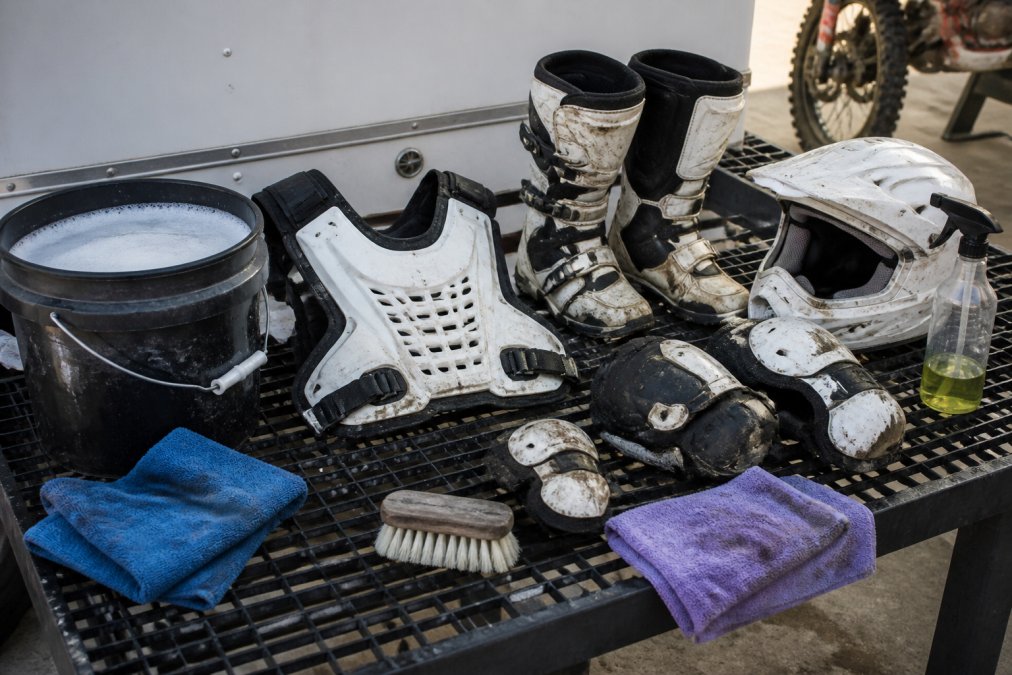
Start with basic cleaning supplies: mild soap, water, and a bucket. Avoid harsh detergents or bleach, which degrade synthetic textiles and can strip protective coatings from armor. A soft-bristled brush or old toothbrush works well for scrubbing away dried mud. Microfiber towels are essential, they absorb water without leaving lint and won't scratch helmet visors or armor surfaces.
For deeper cleaning, you'll want a dedicated degreaser for removing chain lube and oil splatter from jerseys and pants. A spray bottle filled with water helps rinse gear evenly. For helmet interior care, consider enzyme-based odor eliminators designed specifically for gear, these break down sweat compounds rather than just masking smells.
A wash rack or hose setup makes the process efficient. If you don't have a dedicated wash area, a bathtub or large bucket works in a pinch. Lay out all your supplies before starting so you're not scrambling mid-wash.
Drying equipment matters too. Clean towels, a well-ventilated space, and ideally a fan help air dry gear without creating mildew. Never use a dryer on high heat, it damages synthetic textiles and can warp armor.
| Tool/Supply | Purpose | Notes |
|---|---|---|
| Mild soap and water | General cleaning | Avoid bleach or harsh detergents |
| Microfiber towels | Drying and wiping | Won't scratch or leave lint |
| Soft-bristled brush | Scrubbing dried mud | Old toothbrush works fine |
| Degreaser | Removing chain lube | Use sparingly on textiles |
| Spray bottle | Even rinsing | Helps control water flow |
| Enzyme odor eliminator | Helmet liner freshness | Targets sweat compounds |
| Fan or ventilation | Air drying | Prevents mildew growth |
Step-by-Step Process for Cleaning Motocross Protective Equipment
The process to clean maintain motocross gear follows a logical progression: remove loose debris first, wash the textiles, handle the helmet separately, then dry everything thoroughly. This order prevents you from spreading dirt back onto already-clean pieces.
Removing Mud and Debris
Start by removing as much dried mud as possible before water ever touches your gear. Take your jersey, pants, boots, and armor outside and shake them vigorously. Use your soft brush to scrub away caked-on mud from textiles and armor surfaces. Pay special attention to seams and crevices where debris gets trapped.
For stubborn mud on armor and boots, a gentle spray from a hose works, but keep pressure low, high-pressure washers can force water into protective padding and damage structural components. Work methodically from top to bottom so loosened dirt doesn't fall back onto already-cleaned pieces.
This step is critical because it prevents mud from turning into a gritty paste once you add water, which can scratch synthetic textiles and leave abrasive particles embedded in fabric fibers.
Washing Jerseys, Pants, and Synthetic Textiles
Fill a bucket or wash rack with cool water and add a small amount of mild soap. Submerge your jersey and pants, letting them soak for a few minutes to loosen sweat and body oils. Use a soft brush or your hands to gently agitate the fabric, working soap into the material without scrubbing aggressively.
Pay attention to areas that contact your body directly, underarms, collar, and waistband, where sweat accumulates most heavily. For visible stains or chain lube splatter, apply a small amount of degreaser directly to the spot, let it sit for 30 seconds, then scrub gently.
Rinse thoroughly with clean water until soap is completely gone. Soap residue left in fabric attracts dirt and can cause skin irritation on your next ride. Squeeze out excess water gently, don't wring or twist the material.
Caring for Helmet Exterior and Interior
The helmet requires different treatment than textile gear. Start with the exterior: wipe the outer shell with a damp microfiber towel to remove mud and dust. For stubborn debris, use your soft brush with gentle pressure. Never use abrasive scrubbers on the helmet shell, as they can damage the protective coating.
The interior is where most riders struggle. Remove the helmet liner if it's removable, many modern helmets have detachable padding. Soak the liner in cool water with mild soap for 10-15 minutes, then wash by hand using a soft brush. This removes sweat buildup and surface odors.
For non-removable liners, dampen a cloth with soapy water and wipe the interior surfaces thoroughly. Use a dry microfiber towel to absorb excess moisture, then let the helmet air dry completely before putting it back on.
How to Clean Motocross Helmet Liner and Remove Odors
The helmet liner absorbs sweat and moisture every ride, creating an environment where odors develop quickly. A dedicated cleaning approach keeps your helmet fresh and extends the life of the padding.
If your helmet has a removable liner, hand wash it separately from the helmet shell.
Removing Odors from Riding Gear: Practical Solutions
Beyond helmet liners, your entire gear collection can develop odors from accumulated sweat and moisture. A multi-step approach tackles odor at its source rather than just covering it up.
Motocross Gear Maintenance Checklist for Regular Upkeep
A consistent maintenance schedule prevents problems from building up. Use this checklist after every ride or training session to stay on top of gear care.
Post-Ride (Every Session):
- Remove dried mud and debris with brush
- Inspect gear for visible damage or cracks
- Hang gear in ventilated area to air dry
- Check helmet visor for scratches or cracks
Weekly (During Riding Season):
- Wash jersey, pants, and textiles with mild soap
- Wipe helmet exterior and interior
- Inspect padding for compression or damage
- Check boot condition and clean insoles
Monthly:
- Deep clean removable helmet liner
- Treat persistent odors with enzyme products
- Inspect armor for cracks or structural issues
- Replace baking soda in storage areas
Before Storage (Off-Season):
- Thoroughly wash all gear
- Ensure everything is completely dry
- Inspect for damage requiring repair
- Store in clean, dry location with ventilation
Material-Specific Care and Post-Crash Integrity Assessment
Different materials in your protective equipment require tailored care approaches. Understanding what your gear is made from helps you clean it properly and recognize when it needs replacement.
Leather Boots and Armor Protection
Leather requires different treatment than synthetic textiles. After riding, wipe leather boots and armor with a damp cloth to remove mud and sweat. Never soak leather in water, excess moisture causes permanent damage and accelerates deterioration.
Evaluating Structural Integrity After Impact
After a crash, your protective equipment may look fine externally but have internal damage that reduces its effectiveness. A thorough inspection prevents wearing compromised gear.
Storage and Off-Season Care for Motocross Gear
How you store gear during off-season directly affects its condition when you return to riding. Proper storage prevents mildew, odors, and material degradation.
Frequently Asked Questions
How do I clean motocross gear without damaging the fabric?
Use mild soap, lukewarm water, and a soft brush or microfiber towel to avoid damaging synthetic textiles. Avoid harsh degreasers and pressure washers on padded areas. Hand wash jerseys and pants when possible, and air dry completely. For delicate padding, spot-clean with a damp cloth rather than submerging. Always check the manufacturer's care label first to ensure you follow material-specific instructions.
What is the best way to remove odors from riding gear?
Wash gear thoroughly with mild soap and water after each ride, then air dry completely in sunlight, which naturally eliminates odors. For stubborn smells, soak gear in a solution of white vinegar and water (1:3 ratio) for 30 minutes before washing. Baking soda sprinkled inside helmets and boots overnight also absorbs moisture and odor. Store clean, dry gear in a breathable bag rather than sealed plastic to prevent odor buildup.
How often should I clean my motocross helmet liner?
Clean your helmet liner after every few rides or whenever visible sweat buildup occurs. Remove the liner if possible and hand wash with mild soap and cool water, then air dry completely before reinstalling. For quick cleanups between washes, wipe the interior with a damp microfiber towel. Regular cleaning prevents bacteria growth, extends liner life, and maintains moisture-wicking properties that keep you comfortable during rides.
Can I put my motocross jersey and pants in the washing machine?
Most motocross jerseys and pants can go in the washing machine on a gentle cycle with cold water and mild detergent, but always check the care label first. Turn gear inside out to protect graphics and armor pockets. Avoid bleach, fabric softener, and high heat. Air dry completely, never use a dryer, as heat can damage synthetic textiles, elastic, and padding. Hand washing is safer for gear with delicate embroidery or protective elements.