
Benefits of Youth Motocross Riding Boots for Kids
Table of Contents
- Why Youth Motocross Riding Boots Matter for Young Riders
- Foot, Ankle, and Lower-Leg Protection Built Into Motocross Boots for Kids Protection
- Ankle Support, Stiffness, and Flexibility: Balancing Protection With Mobility
- Kids Dirt Bike Boots: Grip, Control, and Comfort on the Pegs
- Youth Dirt Bike Boot Sizing: Getting the Fit Right as Kids Grow
- Kids Motorcycle Boots vs Motocross Boots: What's the Difference?
- Care, Inspection, and When to Replace Youth Motocross Riding Boots
- Conclusion
- Frequently Asked Questions
Last Updated: October 17, 2026
Why Youth Motocross Riding Boots Matter for Young Riders
Youth motocross riding boots are purpose-built protective footwear that shields a child's feet, ankles, and lower legs from the specific forces of off-road riding. The benefits of youth motocross riding boots start with a simple fact: a child's legs are close to the pegs, the exhaust, and the ground, and every one of those can hurt them.
The Injury Risks Kids Face Without Proper Boots
Gym shoes offer zero crush resistance and no ankle support. A low-speed tip-over can pin a foot under the bike; a stray rock off a rear tire can hit an exposed ankle. Parents often ask us whether the gear is really necessary for a beginner. It is, and it's most necessary in the first season, when balance and braking habits are still forming.
Foot, Ankle, and Lower-Leg Protection Built Into Motocross Boots for Kids Protection
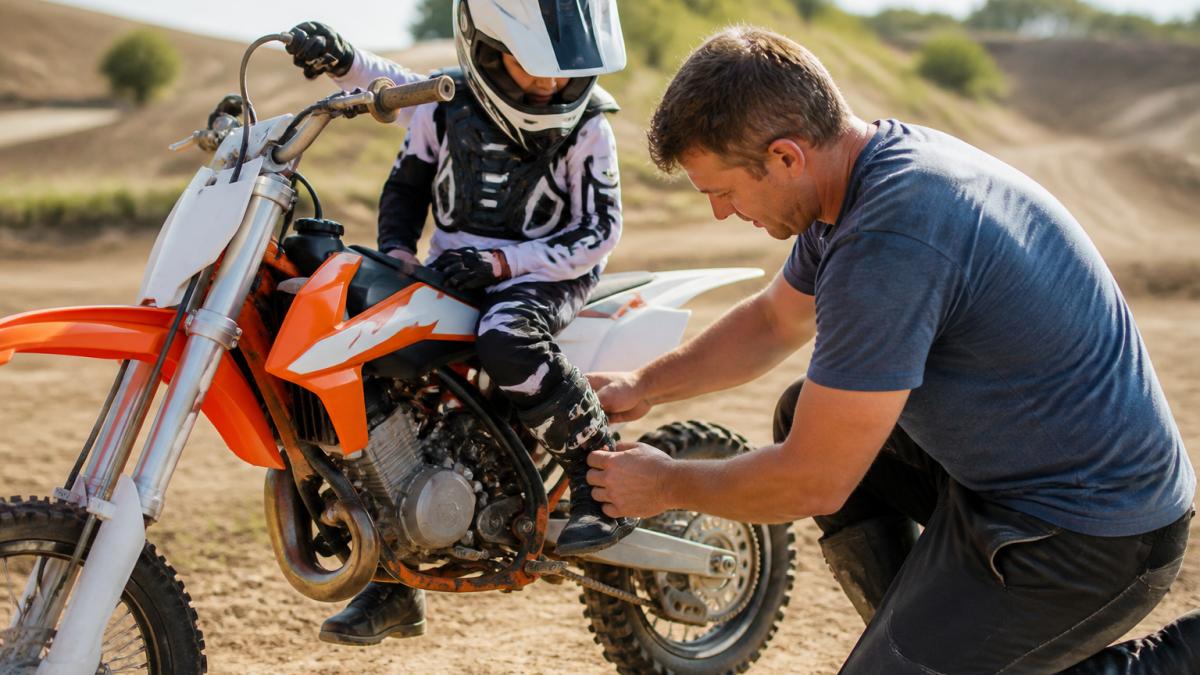
Good motocross boots for kids protection work in layers. A reinforced toe cap absorbs impacts from rocks and roots. A stiff heel cup keeps the heel from folding backward.
Impact, Crush, and Toe Cap Protection
Crush protection is the feature parents underrate most. When a bike falls, the peg, the shifter, or the machine itself lands on the foot. A protective shell with a hard toe box distributes that weight instead of letting it concentrate on small bones. Look for a boot where the toe cap won't flex under thumb pressure.
Ankle Support, Stiffness, and Flexibility: Balancing Protection With Mobility
The right youth boot is stiff where it protects and flexible where a rider needs to move. Ankle support comes from a supportive shell that resists twisting, but a boot that's rigid everywhere turns a small rider into a plank and hurts their control. Flexible construction zones at the front of the ankle let kids shift and brake naturally. This is the trade-off every parent has to weigh, and it's why a hand-me-down boot from an adult or an older sibling often does more harm than good.
How Ankle Support Actually Works
Ankle protection in a motocross boot is not one feature but a system. Rigid side panels and a hinged outer shell limit the sideways roll and hyperextension that cause most foot and ankle injuries in off-road riding. A stiff heel cup keeps the heel from folding backward, and internal reinforcement spreads a hard hit across a wider area so no single bone takes the full load.
Stiffness Is Not One Setting
Boots vary in stiffness along three axes: the sole (how much it flexes when standing on the pegs), the ankle (how much it resists forward and sideways motion), and the shin (how much the tall shell braces the lower leg). A beginner on a small bike benefits from a moderately flexible sole and ankle so they can learn to shift, brake, and balance; a more experienced rider on rough terrain benefits from a stiffer sole and stronger side bracing because the forces are higher and control inputs are more deliberate.
Matching the Boot to the Rider
Use these guidelines when comparing youth boots:
- Beginner, small bike, flat track or yard: prioritize ankle flex and a sole that lets the rider feel the peg. Too-stiff boots make it hard to learn brake and shift feel.
- Intermediate, trails and mixed terrain: look for a boot with rigid side bracing but a defined flex zone at the front of the ankle so the rider can still move naturally.
- Experienced youth racer, rough track: a stiffer sole and stronger shin and ankle bracing help absorb landings and deflect roost and impacts.
The Hand-Me-Down Trap
A boot from an adult or an older sibling is usually too stiff, too tall, and too wide for a young rider. The shell won't flex with their ankle, the sole won't let them feel the peg, and the loose fit lets the foot move inside the boot, which defeats the protection you paid for. Youth-specific boots are built around smaller feet, shorter legs, and lower rider weight, and that difference matters more than the label.
Kids Dirt Bike Boots: Grip, Control, and Comfort on the Pegs
Grip on the foot pegs is a performance feature, not a luxury. A sole with a proper tread pattern locks onto the peg so a rider's foot stays planted through bumps and turns. Sloppy grip means a foot slips, and a slipped foot near a spinning rear wheel is how injuries happen. Comfort matters too: a boot that rubs or pinches pulls a kid's attention off the trail.
Youth Dirt Bike Boot Sizing: Getting the Fit Right as Kids Grow
Youth dirt bike boot sizing should leave a thumb's width at the toe and no heel lift when your child walks. Boots run differently from sneakers, so measure the foot in the afternoon and check the size chart for that specific model. Kids grow fast, but buying a boot two sizes up is a mistake: a loose boot won't hold the ankle, and the protection you paid for disappears.
Run this quick fit check before every season:
- Toe has roughly a thumb's width of room
- Heel stays down when your child walks and stands on the pegs
- Buckles close without pinching the shin
Kids Motorcycle Boots vs Motocross Boots: What's the Difference?
Kids motorcycle boots vs motocross boots comes down to intended use. Street-oriented kids motorcycle boots favor flexibility and walkability. Motocross boots for kids prioritize impact protection, a stiff sole for standing on pegs, and a taller shell that covers the lower leg. If your child rides trails or a race track, choose the motocross boot; a casual motorcycle boot leaves too much exposed.
| Feature | Kids Motorcycle Boots | Kids Motocross Boots |
|---|---|---|
| Ankle support | Moderate | High, rigid side bracing |
| Toe protection | Basic | Hard toe cap |
| Sole | Flexible, walkable | Stiff for peg standing |
| Lower-leg coverage | Shorter | Tall protective shell |
| Best for | Street and casual riding | Trails and race track |
Care, Inspection, and When to Replace Youth Motocross Riding Boots
Inspect boots after every few rides. Check the buckles, the sole seam, the toe cap, and the ankle hinges for cracks or looseness. Rinse off mud and let boots air-dry away from direct heat, since a hot radiator can warp the shell. Replace a boot once the sole separates, a buckle won't hold, or the shell shows a deep crack.
A Simple Inspection Routine
Run this check after every few rides, and always before a race or a long trail day:
- Buckles and straps: close and open each buckle. A buckle that slips, won't latch, or has a bent tongue won't hold the boot tight, and a loose boot lets the foot move inside the shell.
- Sole and seams: look for separation at the toe and heel, exposed stitching, and soft spots in the sole. A sole that peels at the toe catches on pegs and shifter.
- Toe cap and heel cup: press the toe cap with your thumb. If it flexes easily or feels soft, the crush protection is compromised.
- Ankle hinges and side panels: check for cracks, deep gouges, or looseness at the hinge. A cracked side panel no longer braces the ankle.
Cleaning and Drying Without Damaging the Shell
Rinse mud off with a garden hose and a soft brush, then let the boots air-dry in the shade. Never dry them on a radiator, in front of a heater, or in direct sun, high heat can warp the shell and soften the adhesives. Stuff newspaper or a dry towel inside to pull moisture out, and remove the insoles if they come out.
When to Replace
Replace a boot when any of these appear:
- The sole separates from the upper, or the sole is worn through at the peg contact point.
- A buckle won't hold, or the strap anchors are torn.
- The shell shows a deep crack, a bent buckle, or a collapsed side panel.
- The interior padding is crushed or the heel pocket has collapsed.
What Boots Can and Cannot Do
Boots reduce some injury risks, they brace the ankle, spread impact across the foot, and shield the lower leg from roost and the bike, but they cannot prevent every injury. A boot is one layer in a system. Knee guards or knee braces, riding pants, and a well-fitting helmet work together with boots, and each piece covers a different part of the body.
Growth and Fit Checks Each Season
Kids grow fast, so recheck fit at the start of every season and again mid-season. Measure the foot in the afternoon, check the fit with the riding socks and knee protection your child actually wears, and look for a thumb's width at the toe with no heel lift. A boot that was right in spring can be too small by fall, and a too-small boot restricts ankle movement and circulation, both of which hurt control and comfort.
Conclusion
Getting a young rider into proper boots is one of the highest-value gear decisions a motocross family makes. The right pair protects the foot, ankle, and lower leg while still letting a kid move and control the bike. At Moto Dad Racing, our motocross-themed hoodies and tees let the whole family show their passion for the sport, whether you're at the track or watching from the sidelines.
Frequently Asked Questions
What parts of a young rider's foot and leg do motocross boots protect?
Youth motocross riding boots cover the toes, heel, ankle joint, and lower leg. A reinforced toe cap shields against rock strikes and peg impacts, while a molded heel cup and internal ankle reinforcement limit the twisting and crushing forces that cause foot and ankle injuries. The tall supportive shell extends up the shin to deflect stray knocks from other bikes, branches, and roost. Together these features protect the areas most exposed when a child puts a foot down or gets caught in a fall.
How should youth dirt bike boots fit?
Youth dirt bike boot sizing should leave roughly a finger's width of room at the toe, with the heel locked firmly in place so the foot cannot slide forward. Your child should be able to stand on the pegs without their heel lifting, and the buckle system should close snugly without pinching. Avoid buying several sizes up to allow for growth, because an oversized boot reduces ankle support and control. Have your child try boots on with the same socks they ride in, and recheck the fit every few months as their feet grow.
Is there a difference between motorcycle boots and motocross boots?
Yes. Kids motorcycle boots vs motocross boots differ in construction and intended use. Street motorcycle boots prioritize abrasion resistance, weather protection, and walkable soles for pavement. Motocross boots for kids protection focus on a stiff supportive shell, heavy-duty buckles, aggressive peg grip, and impact and crush protection for off-road riding. A street boot's softer sole and lower cut leave the ankle and shin more exposed to the rocks, ruts, and stray knocks common on trails and race tracks.
Can kids wear regular shoes or hiking boots for dirt bike riding?
Regular gym shoes and hiking boots are not a safe substitute for kids dirt bike boots. Sneakers offer no ankle support, no toe cap, and soles that slip on foot pegs, while hiking boots lack the rigid shell and crush protection a dirt bike demands. In a fall or a foot caught between the bike and the ground, the ankle joint takes the full force. Proper youth motocross riding boots are built to absorb that load and keep the foot and lower leg protected.