
When to Replace Your Child's Motocross Helmet
Table of Contents
- Why Helmet Replacement Matters for Young Riders
- Impact of Crashes on Helmet Structural Integrity
- Signs of Helmet Impact Damage: What Parents Should Know
- Understanding the Motocross Helmet Expiration Date
- Growth-Based Replacement: When Your Child Outgrows Their Helmet
- Proper Helmet Storage for Longevity and Safety
- Disposal and Recycling Your Old Motocross Helmet
- Conclusion: Keeping Your Young Rider Protected
- Frequently Asked Questions
Last Updated: October 3, 2026
Why Helmet Replacement Matters for Young Riders
A child's motocross helmet is their most critical piece of safety equipment. It's designed to absorb impact energy and protect the head during crashes, but that protection degrades over time through use, environmental exposure, and material fatigue. At Moto Dad Racing, we understand that keeping your young rider safe means knowing when to replace motocross helmet, not just after visible damage, but on a schedule that accounts for how helmets age.
Most riders and families don't realize helmets have an expiration date built into their materials, separate from crash damage. A helmet that looks fine on the outside may have internal degradation that compromises its ability to protect during a collision.
Impact of Crashes on Helmet Structural Integrity
When a helmet experiences impact during a crash, the expanded polystyrene (EPS) liner absorbs the energy that would otherwise transfer directly to the rider's head. However, this protective capacity is compromised after a significant impact, even if the outer shell appears undamaged.
After any crash involving head contact, you should replace your child's motocross helmet immediately. The EPS liner cannot be restored to its original shock-absorbing properties once crushed, and structural compromise happens at the material level where you cannot see it.
For minor drops or low-speed impacts, inspect carefully for hairline fractures, dents that don't spring back, or visible crushing of the liner. Visual inspection is more reliable than the "sniff test."
Signs of Helmet Impact Damage: What Parents Should Know
Treat each helmet check as a structured safety audit. Follow this step-by-step inspection after every crash or periodically during the riding season.
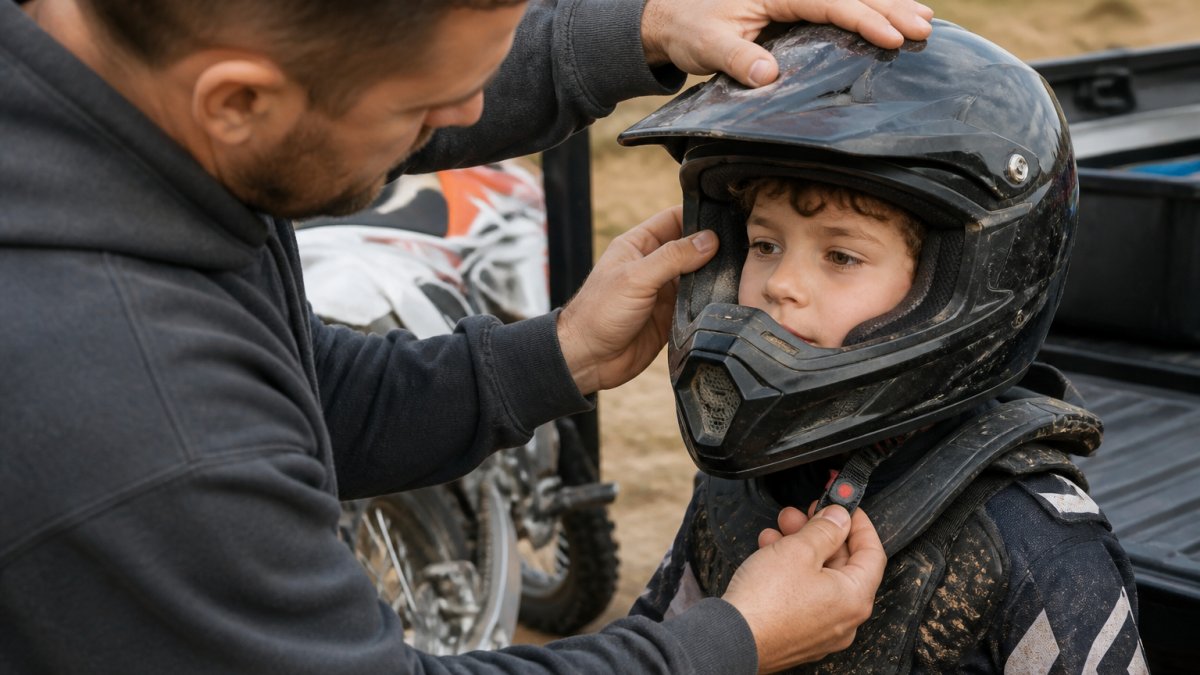
Step 1: Exterior Shell Inspection
Place the helmet on a flat surface in natural light. Scan the entire outer shell for cracks, gouges, splintering, or compromised finish. Pay special attention to the crown, temples, and back where impacts concentrate.
Step 2: Chin Strap and Retention System
Examine the chin strap for tears, fraying, compression, or brittleness. Check D-rings or attachment points, they should be secure, not cracked or loose.
Step 3: Interior Foam and Liner Assessment
Gently press on the EPS foam in multiple locations, crown, sides, back, and temples. The foam should feel uniformly firm.
Check the comfort liner for tears, separation, or uneven compression. If torn, replacement is warranted.
Step 4: Check for Odor and Discoloration
An unusual odor, musty, chemical, or acrid, after a crash may indicate internal foam degradation. Combined with other damage signs, it should trigger replacement.
Look for discoloration inside the helmet, particularly dark spots or staining on the foam, which may indicate moisture intrusion or mold growth.
Step 5: Sizing and Fit Verification
Have your child put on the helmet. It should sit level with the front edge about one finger-width above the eyebrows. Gently twist it side to side, it should move slightly with the head but not slip independently.
When to Replace Based on Inspection Findings
Replace the helmet immediately if you find visible cracks, dents that don't spring back, soft spots in the foam, separation between liner and shell, damaged D-rings, torn chin strap, or unusual odor combined with other damage.
Understanding the Motocross Helmet Expiration Date
Helmets have an expiration date even without crashes. EPS foam, shell resin, and comfort liner all degrade over time due to UV exposure, temperature fluctuations, humidity, and normal use, reducing impact absorption.
Most manufacturers recommend replacing a motocross helmet every 3 to 5 years, regardless of visible damage or crash history. Helmets stored in cool, dry places may last closer to 5 years; those exposed to sunlight, heat, or moisture need replacement sooner.
Check the manufacturing date printed on the interior label or shell. If your child's helmet was manufactured more than 5 years ago, it's time to replace motocross helmet, even if it looks new.
UV exposure accelerates degradation. If your child's helmet has spent considerable time in the sun, plan for replacement closer to the 3-year mark.
Growth-Based Replacement: When Your Child Outgrows Their Helmet
A helmet that's too large will shift during riding, reducing head coverage. A helmet that's too tight creates pressure points and may cause your child to resist wearing it. Regular fit monitoring prevents growth-based safety issues.
Understanding Helmet Fit for Children
The helmet should sit level on the head with the front edge approximately one finger-width above the eyebrows. This positioning ensures adequate coverage of the forehead and temples.
You should be able to fit one finger between the helmet and your child's cheek at the temples when the chin strap is fastened. Two fingers means too large; no fingers means too tight.
Gently twist the helmet side to side with the chin strap fastened. It should move slightly with the head but not slip independently.
Age-Based Growth Replacement Timeline
Children's growth rates vary, but general guidelines help you plan replacement intervals:
Ages 5-8: Grow 2-3 inches per year; check fit every 3-4 months; replace every 12-18 months. Ages 9-12: Grow 1-2 inches per year; check fit every 4-6 months; replace every 18-24 months. Ages 13-16: Check fit every 6 months; replace every 2-3 years. Ages 17+: Check fit annually; helmet may last 3-5 years. Adjust for faster or slower growth.
Seasonal Fit Checks
Make helmet fit checks a seasonal ritual before spring, summer, and fall riding seasons. This prevents your child from riding in a helmet that no longer fits properly.
If your child adjusts the helmet frequently, removes it between sessions, or complains about discomfort, the helmet may be too tight. If it shifts during riding, it's too large. Address fit issues immediately.
The Safety-Comfort Trade-Off
A helmet that doesn't fit properly is nearly as dangerous as no helmet at all. A loose helmet won't stay in position during a crash; a tight helmet causes your child to resist wearing it.
Combining Growth Replacement with Crash and Expiration Timelines
Your child's helmet replacement schedule is driven by three factors: crashes (immediate replacement), material degradation (every 3 to 5 years from manufacturing date), and growth (every 12 to 36 months depending on age). A 7-year-old who crashes and damages their helmet needs immediate replacement, even if they only purchased it 6 months ago.
Track all three timelines for your child's helmet. Note the manufacturing date, the date of any crashes, and the date of each fit check.
Proper Helmet Storage for Longevity and Safety
How you store your child's helmet between rides directly affects how long it remains safe and effective. Store the helmet in a cool, dry location away from direct sunlight. Extreme heat accelerates material degradation, so avoid storing helmets in hot attics, car trunks, or garages without climate control. Similarly, damp environments promote mold growth and can weaken both the foam and shell materials.
Keep the helmet in a helmet bag or padded case to protect it from dust, impacts, and environmental exposure. Never store a helmet in a plastic bag that traps moisture. If the helmet gets wet during riding, dry it completely at room temperature before storing it. Do not use heat sources like hair dryers or heaters to speed drying, as this can damage the EPS foam.
Avoid exposing the helmet to extreme temperature swings, which cause the materials to expand and contract, creating stress fractures. Don't store helmets near solvents, gasoline, or cleaning chemicals, as these can degrade the shell resin and foam. Keep the helmet away from pets and children who might damage it during storage.
Proper storage extends the useful life of your helmet but doesn't reset its expiration date. Even a well-stored helmet manufactured 5 years ago should be replaced due to material fatigue, regardless of its appearance.
Disposal and Recycling Your Old Motocross Helmet
When it's time to replace your child's motocross helmet, responsible disposal is important. Most helmets cannot be recycled through standard curbside programs because they combine multiple materials, plastic shell, expanded polystyrene foam, fabric, and metal hardware, that require different processing methods.
Check with your local waste management facility to see if they accept helmets in their specialty recycling program. Some communities have e-waste or hazardous materials collection days that accept composite items like helmets. Call ahead to confirm before dropping off your old helmet.
Some manufacturers and retailers accept old helmets for recycling or disposal. Contact the helmet manufacturer to ask if they have a take-back program. A few retailers that sell motocross gear may also accept old helmets for recycling as part of their sustainability initiatives.
If no recycling option is available, dispose of the helmet in regular trash. Do not attempt to disassemble it or burn it, as these actions can release harmful materials and create safety hazards.
Conclusion: Keeping Your Young Rider Protected
Knowing when to replace your child's motocross helmet is one of the most important safety decisions you'll make as a parent of a young rider. Whether driven by impact damage, material degradation, or growth, regular helmet replacement ensures your child has the protection they need. Check for signs of damage after every crash, plan for replacement every 3 to 5 years based on manufacturing date, and monitor fit as your child grows.
At Moto Dad Racing, we're committed to supporting families in the motocross community. Beyond safety gear, we offer motocross-themed apparel that lets your entire family celebrate your shared passion for riding. When you invest in proper safety equipment like a quality helmet, pair it with gear that keeps everyone comfortable at the track. Explore our collection of family-focused hoodies and tee shirts designed for riders and their families, because protecting your child starts with the right equipment, and expressing your motocross passion together strengthens your bond as a family.
Frequently Asked Questions
How long should a motocross helmet last before I need to replace it?
Most manufacturers recommend replacing a motocross helmet every 3-5 years, even if it hasn't been in a crash. The expanded polystyrene (EPS) liner and shell materials degrade over time due to UV exposure, temperature changes, and normal wear. For young riders whose heads grow quickly, you may need to replace helmets more frequently based on fit rather than age alone. Always check your helmet's specific manufacturer guidelines, as some brands may have different recommendations.
What are the signs my child's helmet has impact damage?
After any crash, inspect the helmet for visible cracks, dents, or crushed areas on the outer shell. Check the interior EPS liner for compression, cracks, or flattened sections, these indicate the crush zone has been compromised and won't absorb impact properly in a future crash. Look for hairline fractures that may not be obvious at first glance. If the retention system (chin strap) or comfort liner is damaged, that's also a replacement signal. When in doubt, replace it, a helmet that's absorbed one major impact may fail during the next one.
Does a motocross helmet need to be replaced after a minor drop?
A minor drop from a low height onto a soft surface typically doesn't require replacement. However, if the helmet was dropped from chest height or higher onto a hard surface, inspect it carefully for internal foam damage. Even if you don't see visible damage, the EPS liner may have sustained compression that reduces its protective ability. If your child was wearing the helmet during the drop or if there's any doubt about the impact force, replacing it is the safer choice. The cost of a new helmet is far less than the risk of reduced head protection.
What does the motocross helmet expiration date mean, and should I follow it?
The expiration date on your helmet (often printed inside) marks when the manufacturer recommends replacement based on material degradation. UV exposure, temperature fluctuations, sweat, and humidity break down the EPS liner and shell materials over time, reducing their ability to absorb impact and prevent concussion. Even if your child's helmet hasn't been crashed, following the expiration date ensures the safety certification standards (DOT approved or Snell rating) remain reliable. Don't rely solely on appearance, internal degradation happens invisibly.
Keep your young rider protected with the right helmet at the right time. Visit Moto Dad Racing to find apparel that lets your entire family represent your motocross lifestyle with comfort and style.