
Motocross Knee Braces for All-Day Comfort
Table of Contents
- What Makes a Motocross Knee Brace Comfortable for Extended Wear
- Motocross Knee Brace Sizing Guide
- Best Knee Brace Socks for Motocross
- How to Prevent Knee Brace Chafing
- Mechanical Hinges and Lateral Stability
- Post-Injury vs. Preventative Bracing
- Frequently Asked Questions
Last Updated: October 2, 2026
What Makes a Motocross Knee Brace Comfortable for Extended Wear
A comfortable motocross knee brace balances protection with wearability, and motocross knee braces comfort is something that matters far more than riders typically realize until they're stuck in the pits with raw skin and sore joints.
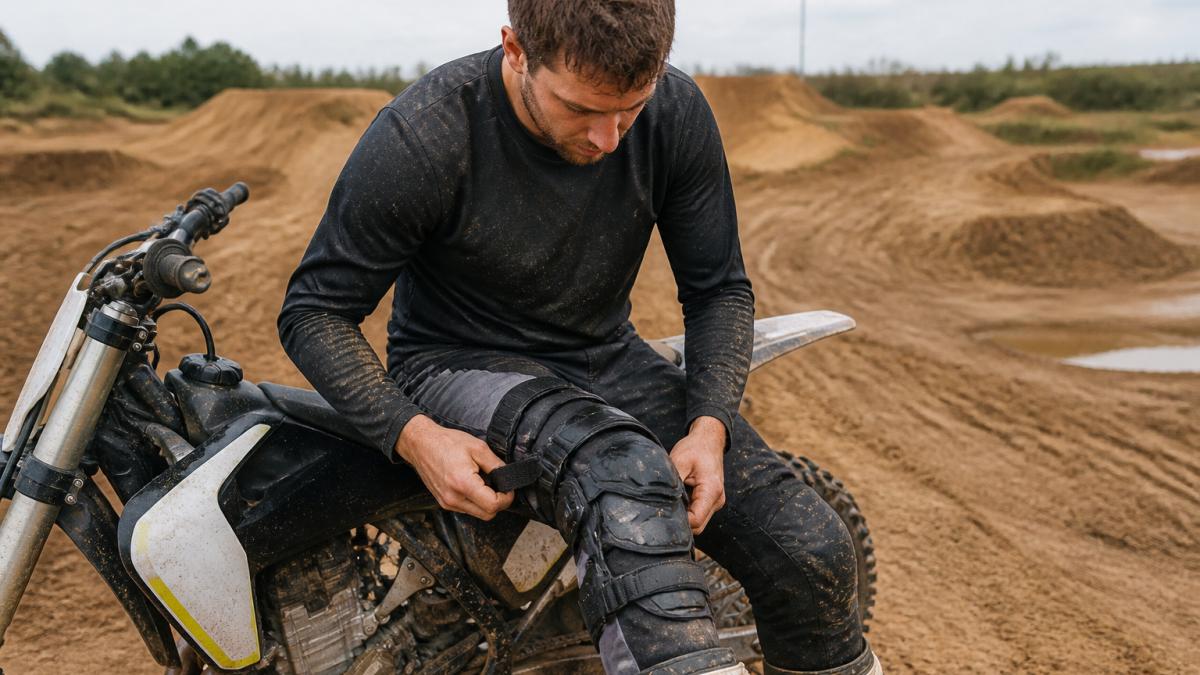
Comfort hinges on three core factors: construction type, impact absorption quality, and overall weight. Each one directly affects how long you can ride without fatigue setting in.
Rigid Frame vs. Soft Sleeve Construction
Rigid frame braces offer superior lateral stability and impact protection. They're built with thermoplastic shells, often reinforced with carbon fiber, that provide mechanical hinge support and prevent hyperextension effectively.
Soft sleeve braces use compression and neoprene to provide support without the rigid structure. They're lighter, more breathable, and feel less restrictive during long sessions. However, they sacrifice some protection against direct impacts and don't prevent lateral movement as reliably.
The real decision comes down to use case. If you're riding to prevent injury, a soft sleeve wins on comfort. If you're coming back from a ligament injury, the rigid frame's superior joint stability justifies the weight penalty.
Impact Absorption and Patella Protection
Patella protection matters more than most riders acknowledge. The kneecap absorbs tremendous force during impacts, and a brace without proper padding leaves you vulnerable to contusions that sideline you for weeks.
Look for braces with condyle pads, the foam or gel cushioning positioned on either side of the knee joint. These absorb impact energy before it reaches bone, reducing the risk of ACL and ligament strain. Quality impact-resistant materials like high-density foam or gel inserts distribute force across a larger surface area, preventing pressure point concentration that leads to bruising.
The best motocross knee braces for all day comfort incorporate multi-layer padding that stays in place during movement. Single-layer designs shift and bunch, creating hot spots and reducing protection effectiveness mid-ride.
Weight and Fatigue Considerations
A heavy brace works against you over hours. Your quadriceps and hip flexors compensate for the added resistance, leading to accelerated fatigue that affects your control and decision-making late in the day.
Modern braces range from under 8 ounces to over 16 ounces per unit. Lighter options sacrifice some rigid protection but preserve your endurance. Many serious riders accept slightly less rigid frame support in exchange for weight reduction, the fatigue prevention often outweighs the marginal protection loss.
Motocross Knee Brace Sizing Guide
Proper sizing determines whether a brace protects effectively or becomes a source of frustration. An oversized brace migrates during movement; an undersized one restricts blood flow and creates pressure points.
Measuring for Proper Fit
Measure your knee circumference at the midpoint, directly above the patella. Wrap a soft measuring tape snugly but not tight, it should slide freely.
Don't measure while standing. Sit with your leg extended and relaxed; this mimics the riding position and gives you the actual dimensions your brace will encounter. Many riders measure standing, then discover the brace fits differently once they're on the bike.
Take measurements at the same time of day. Legs swell slightly as the day progresses, especially if you've been riding. Morning measurements tend to be smaller than afternoon ones.
Custom Fit vs. Off-the-Shelf Options
Off-the-shelf braces work well for most riders when sized correctly. They're affordable, available immediately, and manufacturers have refined sizing over years of feedback. The trade-off is that they're built to average proportions, if your leg shape deviates from the standard, fit suffers.
Custom braces address this directly. They're molded to your exact leg geometry, eliminating pressure points and migration issues. The downside is cost and lead time. Custom options make sense if you're recovering from injury or if you've tried multiple off-the-shelf sizes without finding comfort.
| Sizing Factor | Off-the-Shelf | Custom Fit |
|---|---|---|
| Cost | Lower | Higher |
| Availability | Immediate | 2-4 weeks |
| Fit precision | Good for average legs | Exact to your shape |
| Comfort for extended wear | Depends on leg shape | Superior |
| Best for | Preventative use | Post-injury recovery |
Best Knee Brace Socks for Motocross
The sock you wear under your brace matters as much as the brace itself. A standard cotton sock absorbs sweat, bunches, and creates friction that leads to blisters and chafing within hours.
Moisture-Wicking and Breathability Standards
Moisture-wicking socks pull sweat away from your skin into the fabric's outer layers, where it can evaporate. This prevents the warm, damp environment that breeds blisters and skin irritation.
Breathability matters equally. A sock that wicks moisture but traps heat creates a pressure-cooker effect inside your brace. The best knee brace socks for motocross balance moisture management with airflow, keeping your skin dry and cool even during intense sessions.
Many riders overlook sock thickness. Thin socks compress less under brace pressure, reducing the risk of circulation restriction. Thicker socks feel cushioned initially but compress over time, creating gaps that allow the brace to shift.
How to Prevent Knee Brace Chafing
Chafing is the most common complaint from riders who abandon braces. It's also entirely preventable with attention to strap tension, base layer selection, and break-in strategy. The difference between a brace you wear all day and one gathering dust in your garage often comes down to these three factors.
Strap Tension and Pressure Point Management
Over-tightened straps create pressure points that develop into raw skin within an hour. The instinct is to cinch straps tight for maximum support, but this backfires.
Adjust straps after 10-15 minutes of riding. Your leg position changes once you're on the bike, and initial tension rarely matches what you actually need.
Pressure point hot spots develop where straps cross bone or where rigid edges meet skin. Use thin foam padding or athletic tape to cushion these areas before your first ride. A few minutes of prep prevents days of discomfort.
Base Layer and Anti-Chafe Product Selection
The sock you wear under your brace matters as much as the brace itself. A standard cotton sock absorbs sweat, bunches, and creates friction that leads to blisters and chafing within hours.
Thickness is critical. Thin socks (under 1mm) compress less under brace pressure, reducing the risk of circulation restriction and pressure-induced chafing.
Beyond socks, anti-chafe products applied directly to high-friction zones prevent raw skin before it starts. Products containing zinc oxide or silicone-based lubricants create a barrier between skin and brace material.
Some riders use compression sleeves under their braces as an additional layer.
Break-In Periods and Long-Term Skin Health
New braces need a structured break-in period. Start with 20-30 minute sessions, then gradually extend to full rides over two to three weeks. This allows your skin to adapt and lets you identify pressure points before they become serious problems.
During break-in, monitor your skin closely.
Long-term skin health depends on cleanliness and drying protocols. Sweat and dirt trapped between brace and skin create conditions for fungal growth and persistent irritation.
If chafing does develop, treat it immediately. Clean the area, apply an antibiotic ointment, and cover it with a non-adhesive pad before your next ride. Continuing to ride on open chafing without protection can lead to infection.
Mechanical Hinges and Lateral Stability
Mechanical hinges are the joint support system that prevents hyperextension and lateral movement. Understanding how they work helps you choose a brace that actually protects your knee rather than just looking protective.
Hinges work by resisting motion in specific directions.
The best motocross knee braces comfort features include dual hinges positioned on either side of the knee for all day comfort. This design provides medial-lateral stability without restricting your range of motion.
Hinge quality varies dramatically. Cheap hinges flex and shift under load, losing effectiveness mid-ride. Quality hinges maintain rigidity throughout the session, providing consistent support when you need it most.
Post-Injury vs. Preventative Bracing
How you use a brace depends on whether you're recovering from injury or preventing one.
Preventative braces are lighter, more comfortable for extended wear, and prioritize breathability. They provide enough support to reduce injury risk during normal riding without the bulk that causes fatigue.
Post-injury braces prioritize protection over comfort. You need maximum joint stability, impact absorption, and restriction of harmful movement patterns.
Many riders confuse the two. They buy a heavy post-injury brace for preventative use, find it exhausting, and abandon bracing altogether.
Choosing the right motocross knee brace means balancing protection with wearability, and that balance shifts based on whether you're preventing injury or recovering from one.
Frequently Asked Questions
What are the most comfortable motocross knee braces for long rides?
The most comfortable motocross knee braces combine lightweight construction with moisture-wicking materials and ergonomic padding. Look for braces with adjustable strap tension to reduce pressure points, soft sleeve designs that breathe well, and condyle pads that distribute impact energy evenly. Proper sizing and a solid break-in period are equally important, comfort improves significantly once the brace conforms to your leg.
How should a motocross knee brace fit for maximum comfort?
A proper-fitting knee brace sits centered on the patella with the hinge aligned to your knee joint. The brace should feel snug but not restrictive, allowing full range of motion without slipping. Measure your knee circumference and leg length before purchasing. Strap tension should be firm enough to prevent anti-migration but loose enough that you can slide one finger underneath. Comfort improves after a 2-3 week break-in period as materials soften.
Do motocross knee braces actually prevent ACL injuries?
Motocross knee braces reduce injury risk by limiting hyperextension and lateral movement, which are common ACL injury mechanisms. Rigid frames with mechanical hinges provide medial-lateral stability during rotational forces. However, no brace eliminates injury risk entirely. They work best as part of a complete injury prevention strategy that includes proper riding technique, core strength, and leg conditioning. Post-injury braces offer more support than prophylactic designs.
What are the best knee brace socks for motocross?
Choose socks with moisture-wicking synthetic blends or merino wool that pull sweat away from skin, preventing the chafing and irritation that occurs under braces during all-day wear. Compression socks offer added support and improve blood circulation. Avoid cotton socks, which trap moisture and increase friction. Look for seamless construction and extra padding around the shin and calf where brace straps create pressure points.