
Motocross Apparel for Racing Families: 2026 Guide
Table of Contents
- Youth Motocross Gear Sets and Adult Apparel
- Matching Motocross Family Shirts and Customized Team Gear
- Dirt Bike Gear Maintenance Tips for Long-Lasting Apparel
- Budgeting for Multi-Rider Families
- Safety Certification and Performance Riding Gear
- Pit Crew Aesthetic: Off-Track Casual Wear
- Frequently Asked Questions
Last Updated: September 15, 2026
Youth Motocross Gear Sets and Adult Apparel
Motocross apparel for racing families starts with getting the basics right at both ends of the size range: youth riders need gear that fits growing bodies, and adults need pieces that hold up to track days and wash cycles. This guide from Moto Dad Racing covers what actually matters when you're outfitting multiple riders.
Youth sizing is where most families get tripped up first. A 5-year-old and a 9-year-old can wear the same labeled size and look completely different in it, because youth cuts vary wildly between relaxed and fitted. Measure chest and body length before ordering, not age. Youth tee sizing typically runs XS through XL.
For adults, the priorities shift. Moisture-wicking fabric matters more than graphics once you're actually riding, and durability matters more than either.
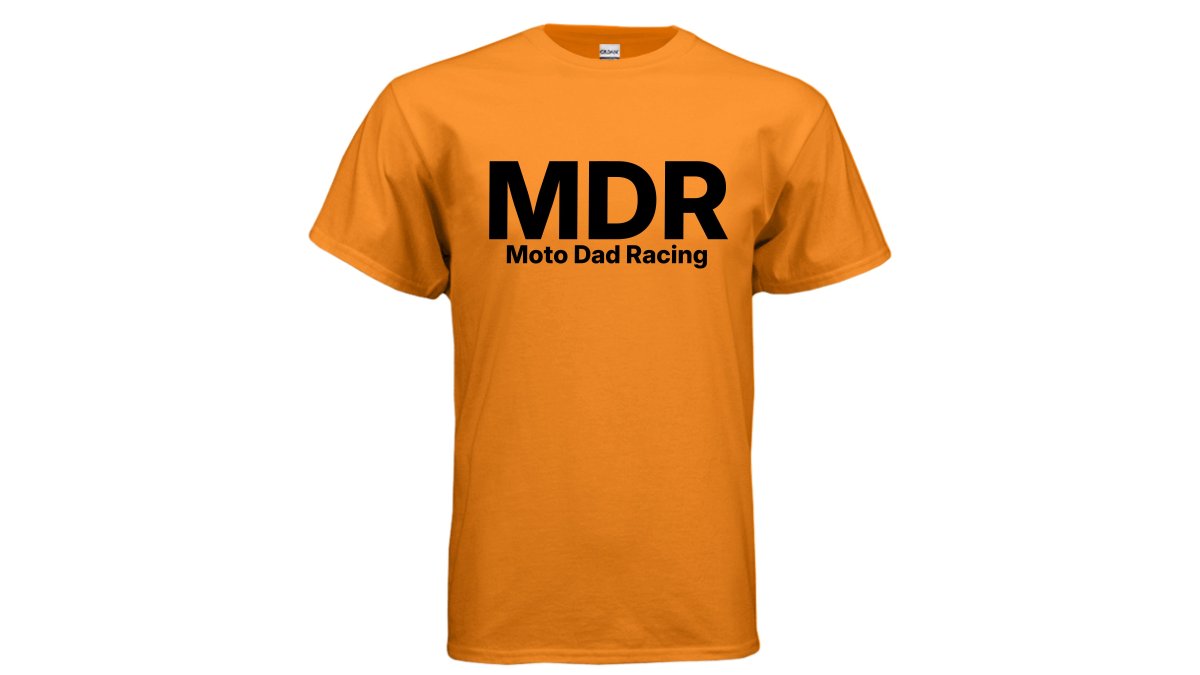
Matching Motocross Family Shirts and Customized Team Gear
Matching motocross family shirts work best when they coordinate rather than duplicate. A father-son tee pairing, for example, lets each person wear a design that fits their size and style while still reading as a set from across the pits.


Customized team gear follows the same logic. Families who race together often want their name, number, or a shared phrase on the back of hoodies and tees.
The U.S. Consumer Product Safety Commission guidance on children's apparel is worth checking if you're ordering decorated youth items, since children's clothing has specific labeling requirements.
Dirt Bike Gear Maintenance Tips for Long-Lasting Apparel
Dirt bike gear maintenance tips for a racing family are different from tips for a single rider, because you're not maintaining one kit, you're maintaining four or five, on different wash cycles, with different wear patterns, and you're trying to stretch each piece across seasons and siblings. Most gear-care advice online is written for one rider. This section is written for the family gear bag.
The core habits still apply: wash cold, dry low, treat stains before they set. What changes at family scale is the system around those habits.
Build a three-bin sort before anything hits the machine. One bin for muddy riding gear (jerseys, pants, gloves), one for casual apparel (tees, hoodies), one for anything with a printed or heat-transfer graphic you care about. Mixing bins is how a mud-caked jersey abrades the print on a hoodie in the same load.
Pre-rinse mud, don't pre-soak graphics. Track clay and dust lodge deep in knit fabric and need a cold rinse to lift out before the wash cycle. But don't leave printed pieces sitting in a bucket, prolonged soaking is what lifts heat-transfer graphics at the edges. Rinse mud immediately, wash graphics within a day or two.
Wash riding gear separately from street clothes. Riding gear carries fine grit that acts like sandpaper against softer cotton in the same drum. A dedicated riding-gear load also lets you use a sport-specific detergent without worrying about what it does to everyday fabrics.
Skip fabric softener and dryer sheets on anything moisture-wicking. Both leave a residue that clogs the capillary channels in performance polyester, which is the mechanism that moves sweat off skin. Once clogged, a jersey stops wicking and starts feeling clammy, and no amount of re-washing fully restores it.
Air dry performance fabric; low heat only for cotton. Heat is the single biggest killer of both elastic waistbands and moisture-wicking fibers. A jersey hung to dry in a garage will outlast an identical jersey run through a hot dryer.
Repair before you replace. A blown seam on a jersey, a torn knee on a pant, or a split glove seam is usually a fifteen-minute fix with a heavy-duty needle and polyester thread. Most families replace gear that's 90 percent intact because of a single failed seam. Learning one basic stitch pays for itself the first season.
Rotate, don't hoard. Two jerseys in rotation last longer than one jersey worn twice as often, because each piece gets a full dry cycle between uses. Damp gear stored in a bag grows odor-causing bacteria that no wash fully removes. Give every piece 24 hours to dry fully before it goes back in the gear bag.
Hand-me-downs need a maintenance pass first. Before youth gear passes to a younger sibling, check three things: elastic waistbands (they lose stretch first), knee and elbow panels (abrasion thins them), and any hook-and-loop closures (they collect lint and stop gripping). Replace or repair those three and a hand-me-down performs like new for the next rider.
The American Cleaning Institute's fabric care guidance covers how detergent choice and water temperature affect synthetic performance fabrics over time, and is worth reading once before you set your family's wash routine.
Budgeting for Multi-Rider Families
Budgeting for multi-rider families is a different problem than budgeting for one rider, because the costs don't scale linearly, they scale with growth spurts, crash replacements, and the fact that a nine-year-old's gear has a useful life measured in months, not seasons. The goal isn't to spend less. It's to spend in the right order and stop re-buying the same category every year.
The first principle: separate safety spend from style spend, and never let one borrow from the other. Helmets, goggles, chest protectors, knee braces, and boots are safety equipment. Jerseys, pants, tees, and hoodies are apparel. A family that cuts the helmet budget to afford matching hoodies has the priority backwards, and the reverse is also true, you don't need a $400 helmet for a five-year-old riding a 50cc in a backyard.
Structure the season in three tiers.
- Tier 1, Non-negotiable, per rider: helmet, goggles, boots, and any protective gear the rider's class or track requires. Buy new, buy correctly sized, replace after any significant impact. This is the one category where hand-me-downs are usually a bad idea.
- Tier 2, Riding apparel, per rider: one jersey and one pant in rotation, plus a spare jersey. Buy mid-tier, not top-tier. A mid-tier jersey that fits well outperforms a premium jersey that's a size off.
- Tier 3, Casual and matching apparel, per family: tees, hoodies, and coordinated family pieces. This is where you save, buy on sale, and buy fewer pieces than you think you need.
Buy one good riding setup per rider, not two. Two jerseys in rotation is the sweet spot. Three is a luxury. A single jersey worn every practice and every race will fail at the seams within a season; two jerseys rotated will each last closer to two seasons, which is cheaper per season than replacing one jersey twice.
Plan hand-me-downs before you buy, not after. Youth gear passes down best when it's bought with the next rider in mind: neutral colors, no personalized name or number on the youth pieces, and cuts that aren't so fitted they only work for one body type. Personalized youth gear is a one-rider purchase, factor that in before you pay for customization.
Time your purchases around the calendar, not the race schedule. Off-season and end-of-season clearances are when last year's colorways drop in price, and colorway is the one thing that doesn't affect performance. A family that buys next season's riding gear in the off-season can often outfit two riders for what one would cost at peak season.
Track cost per season, not cost per item. A $60 hoodie worn three times a week for two years costs less per wear than a $25 hoodie worn twice and outgrown. For youth casual apparel, the math usually favors buying fewer, better pieces, kids outgrow cheap tees as fast as good ones, and the good ones survive to the next sibling.
Keep a small repair and replacement fund. Seams blow, gloves wear through, and goggles get scratched.
Safety Certification and Performance Riding Gear
What this means in practice:
Pit Crew Aesthetic: Off-Track Casual Wear
Frequently Asked Questions
What should a motocross family wear to the track?
For racing, prioritize safety: helmets, goggles, gloves, and protective gear sets. For casual wear, choose moisture-wicking motocross jerseys and pants made from breathable materials. Matching motocross family shirts and hoodies are great for pit crew and spectator comfort. Youth sizes start at XS and adult sizes up to 4XL. Look for durable construction like double-needle stitching and pill-resistant fabrics to withstand track conditions.
How do you choose comfortable motocross-themed apparel for kids?
Focus on youth sizing and soft, breathable fabrics. Youth t-shirts like the Gildan G640B (100% ring-spun cotton) offer a modern classic fit with a tear-away label for comfort. For hoodies, look for moisture-wicking blends like DryBlend that keep kids dry. Check size charts. Avoid overly tight fits that restrict movement. Matching family sets can make kids excited to wear their gear.
Are there matching motocross outfits for racing families?
Yes, many brands offer matching motocross family shirts and hoodies. Look for sets that include adult and youth sizes. For example, a father-son tee or hoodie combo lets you coordinate without full uniformity. Prices range from $19.99 for youth tees to $35.00 for adult hoodies. These sets are popular for race day photos and pit crew unity.
What is the difference between track-ready gear and casual motocross apparel?
Track-ready gear includes protective equipment like helmets, chest protectors, and abrasion-resistant jerseys and pants, often meeting safety standards. Casual motocross apparel focuses on comfort and style for off-track wear, such as hoodies, tees, and pit crew clothing. While casual wear may feature moisture-wicking fabrics, it lacks impact protection. Always wear certified gear when riding; save the matching family shirts for spectating or post-race.
Outfitting a whole family for motocross season is a real budget and logistics challenge, and most generic merch falls apart after a few washes. Moto Dad Racing makes apparel built for the whole crew, with moisture-wicking tees, durable hoodies, and designs that work on the track and off it. Browse the collection and find matching gear for every rider in your family.